The fastest way to improve handwriting in young kids isn't more copying. It's building the hand strength, grip and letter habits underneath, a few playful minutes at a time.
Maybe your kindergartener's letters float above the line, crash into each other or change size mid-word. Maybe your preschooler grips the pencil like a dagger and says their hand is tired after one line. Both are very common, and both usually get better with the right kind of practice.
This guide shows how to improve handwriting step by step: why it still matters, the six building blocks behind neat letters, what to expect at each age, how to set up posture and grip, 10 easy tips, a weekly plan and free tracing worksheets.
Quick takeaways
- Messy writing usually has a root cause: weak hands, an awkward grip or unclear letter habits.
- Short pencils, good posture and an angled page make writing easier right away.
- Teach letters top to bottom, with the same words every time.
- To improve handwriting, ten minutes a day beats an hour on the weekend.
6 Building Blocks You Need to Improve Handwriting
Occupational therapists (OTs) look past the messy page to the skills underneath. Telling a child to “just write neater” rarely works if their hands get tired or their grip is awkward. Fix the building block, and the writing follows.
| Building block | What it does | Build it with |
|---|---|---|
| Hand strength | Holding a pencil steady without tiring | Playdough, tearing paper, tongs |
| Posture | A stable body so the hand can move freely | Feet flat, right-size table |
| Pencil grip | Fingers, not the fist, steer the pencil | Short pencils, pom-pom trick |
| Eye-hand skills | Copying shapes and staying on the line | Mazes, tracing lines, puzzles |
| Letter formation | Starting each letter in the right spot | Top-to-bottom teaching, verbal cues |
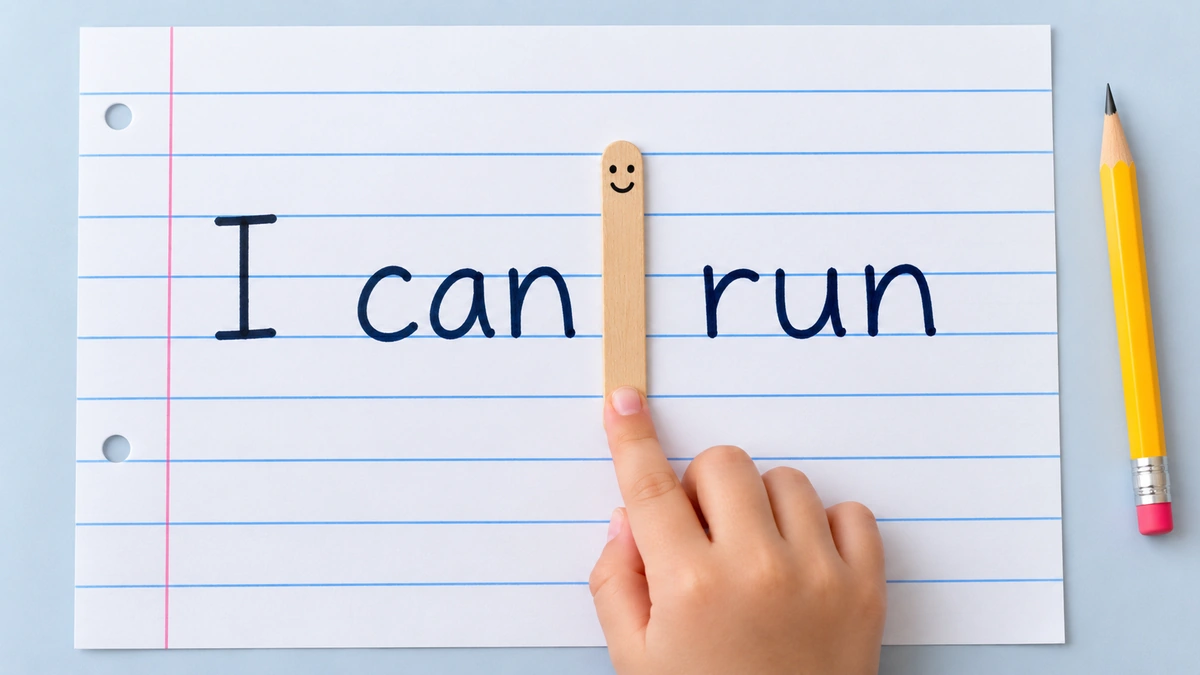
| Size and spacing | Even letters with gaps between words | Lined paper, a spacing stick |
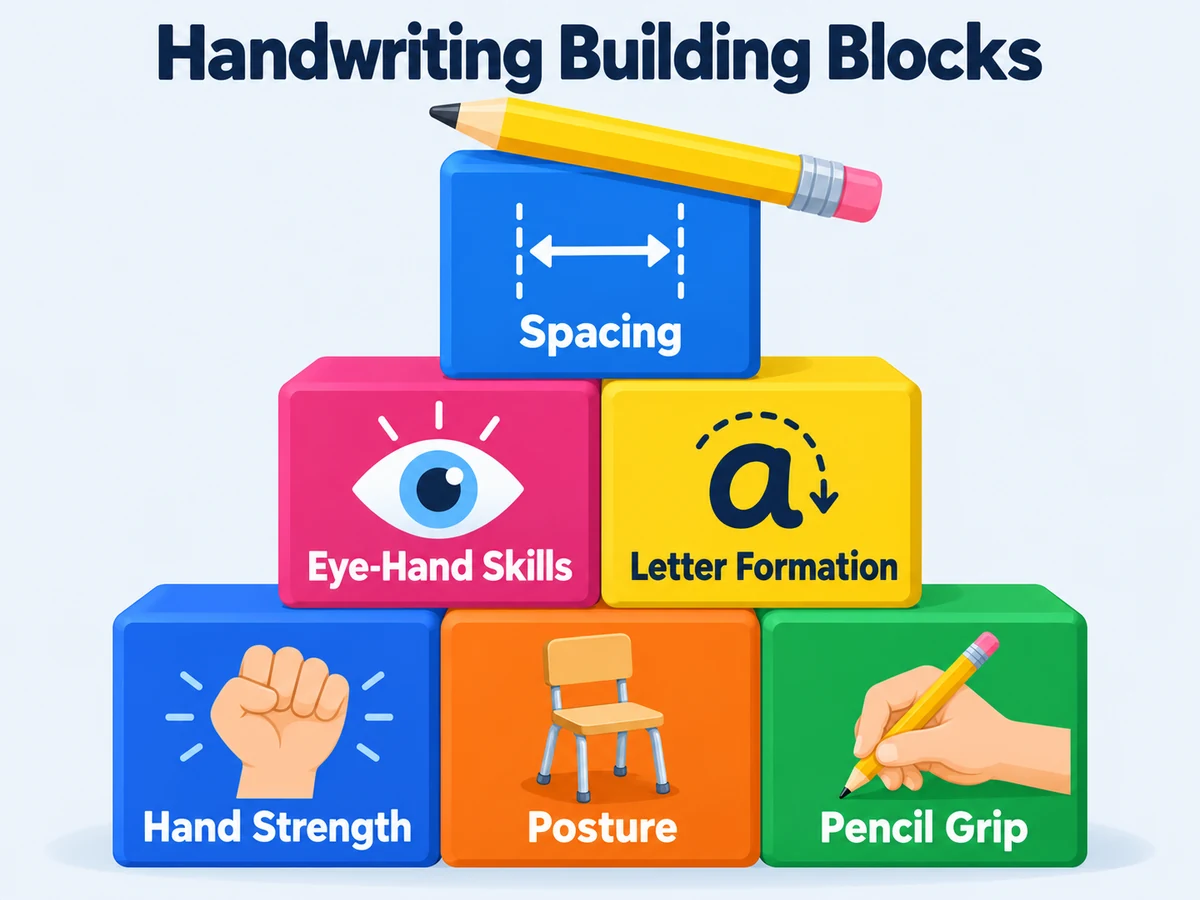
Start at the bottom of the tower. To improve handwriting, hand strength and posture come first, because they make everything above them easier, which is why so many OT tips sound like play rather than writing practice.
Handwriting by Age: What to Expect
Letters are built from simple strokes, so shape copying is a good clue to writing readiness, and a good place to improve handwriting early. Here's the usual path, with wide ranges.
Lines and circles
Copies a horizontal line and a circle. Scribbles and draws with whole-arm movements.
Crosses and first letters
Copies a cross and may write a few capitals, often from their name.
Squares and more letters
Copies a square, writes their name and many uppercase letters.
Triangles and words
Copies a triangle, writes lowercase letters and short words with spaces.
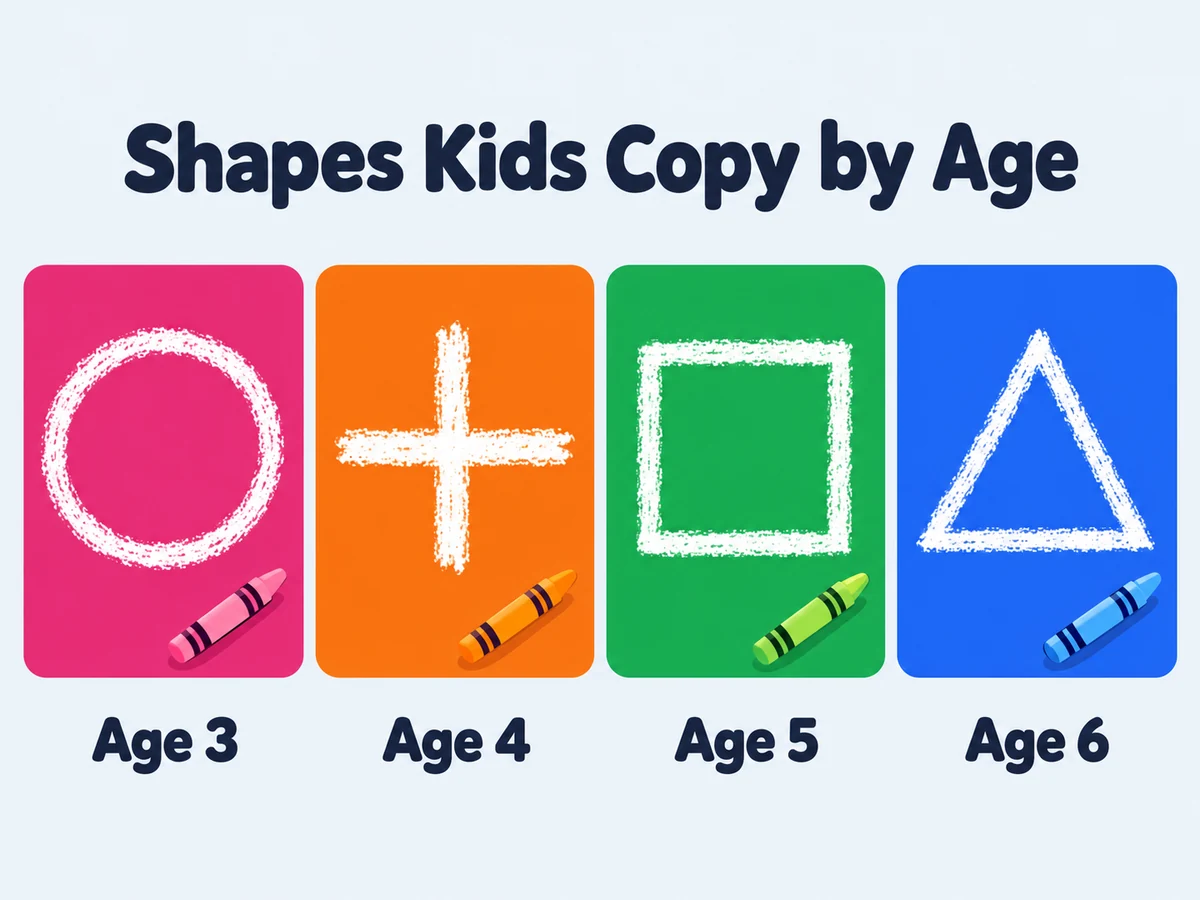
Where these ages come from: occupational therapists at The OT Toolbox describe children copying a horizontal line and circle by about 3, a cross by 4, a square around 5 and triangles by about 6. The CDC's milestones for 4-year-olds include holding a crayon between the fingers and thumb rather than in a fist.
If your 4-year-old can't copy a cross yet, practice the strokes first. Our pre writing strokes guide and tracing lines worksheets are the right step before letters, and they'll help improve handwriting later.
Set Up Posture and Paper to Improve Handwriting
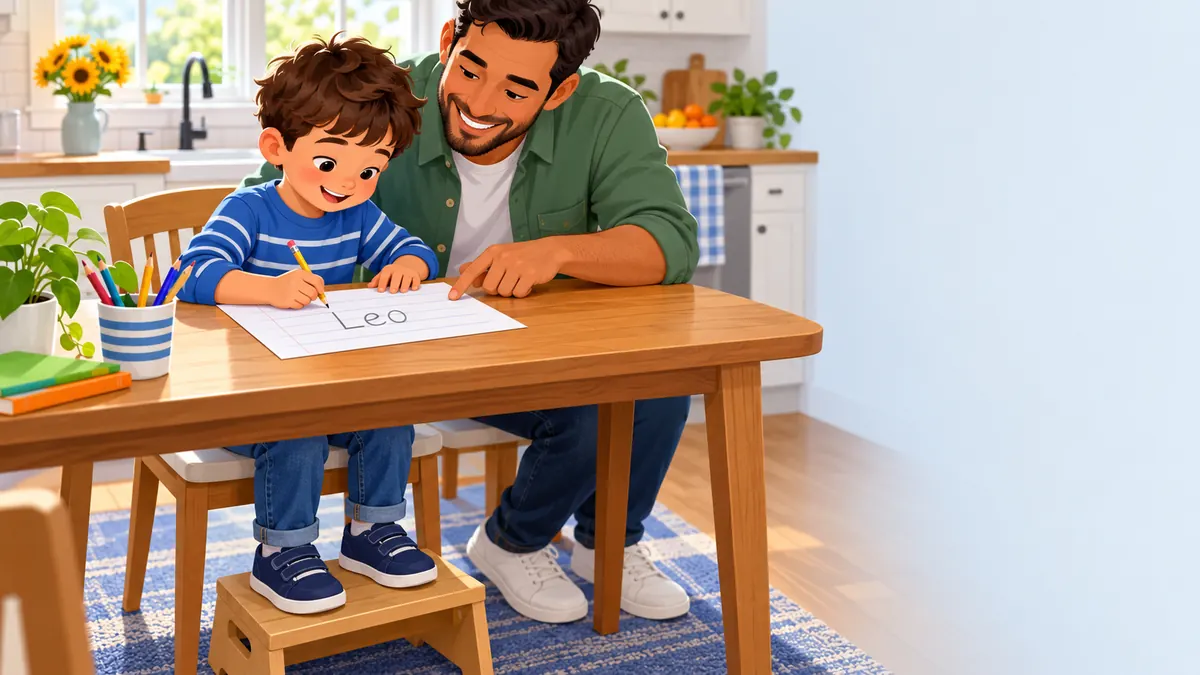
This is the quickest way to improve handwriting. A wobbly body makes for wobbly letters, so check the setup before you check the writing.
- Feet flat on the floor or a step stool, not dangling.
- Hips, knees and ankles bent at about right angles.
- Table at about elbow height, with forearms resting on it.
- Paper tilted to follow the writing arm: right corner up for righties, left corner up for lefties.
- The helper hand holds the paper still.
- Short pencils or crayons for small hands.
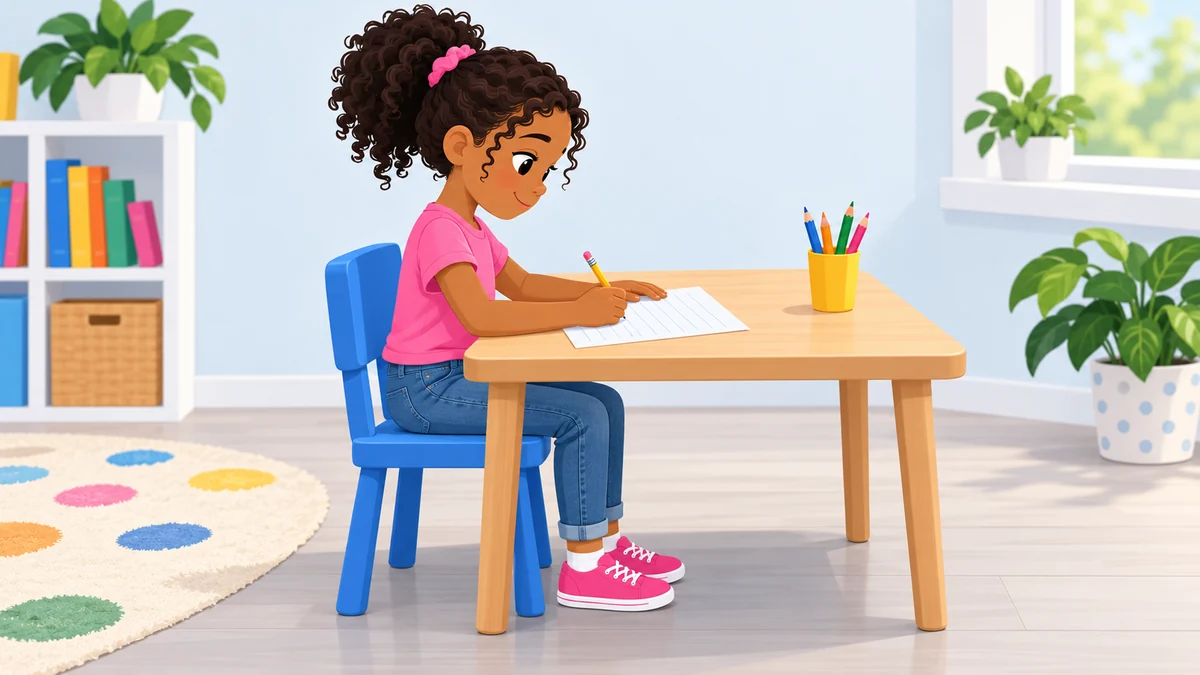
Why the angled paper?
Pediatric OTs at Lurie Children's Hospital recommend placing paper at a slight angle to follow the natural arc of the writing hand. Lefties especially benefit, because a straight page forces the wrist into an awkward hook.
How to Fix Pencil Grip (Gently)
The grip most OTs aim for is the tripod: the pencil pinched between the thumb pad and index finger, resting on the middle finger. Most kids grow into it between about 4½ and 6. Before then, a fist or four-finger grip is a normal stage.
Try these tricks
Use short or broken crayons and golf pencils. Tuck a small pom-pom under the ring and pinky fingers. Say “pinch the tip, rest it on the pillow” (the middle finger).
Skip these
Constantly correcting mid-sentence, or forcing a grip on a 3-year-old. It frustrates kids and rarely sticks.
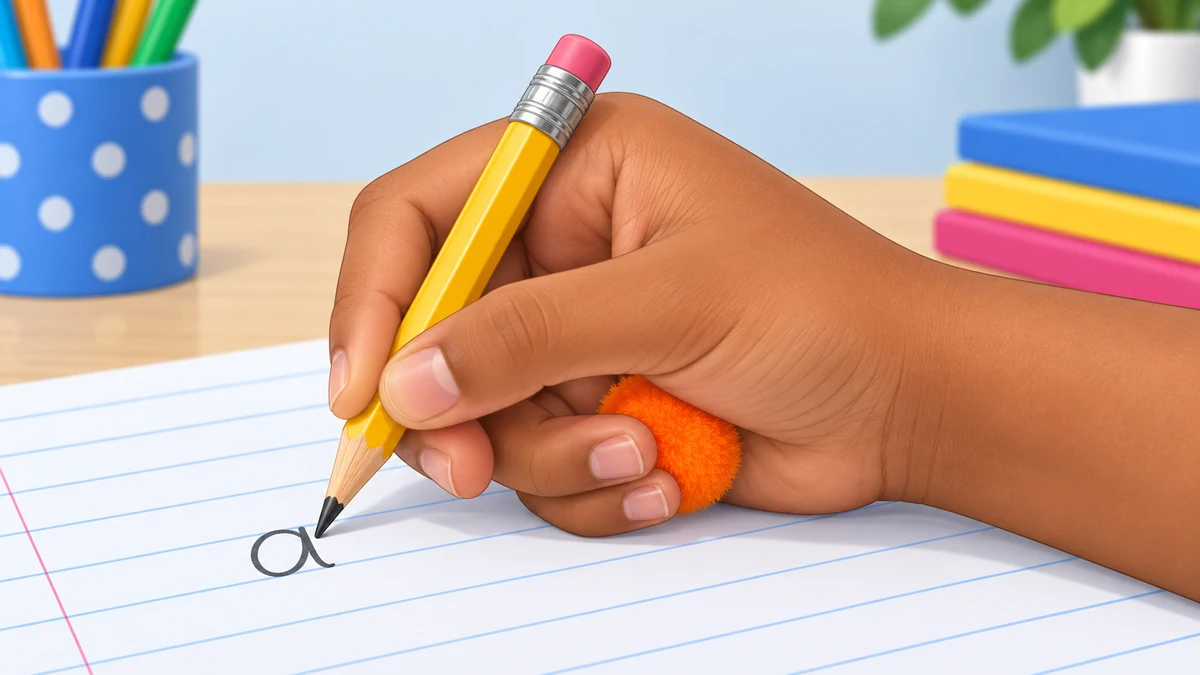
If a child keeps struggling, Lurie Children's suggests trying different pencil grips to find one that helps. Grip is just one block, though. The hand strength tips below often improve handwriting and grip at the same time.
10 Easy Tips to Improve Handwriting at Home
These tips to improve handwriting cover every building block, and most take five minutes. Pick two or three to start; you don't need all ten at once.
Warm Up the Hands
Ages 3 to 7
- How: two minutes of squeezing playdough, tearing paper or picking up pom-poms with tongs before writing.
- Say: “Let's wake up our fingers!”
Write on a Vertical Surface
Ages 3 to 6
- How: use an easel, whiteboard or paper taped to a wall. It builds wrist and shoulder stability.
- Say: “Big letters on the board today!”
Teach Top to Bottom
Ages 4 to 7
- How: most letters start at the top. Show where to start and model each stroke slowly.
- Say: “Start at the top and pull down.”
Start With Straight-Line Letters
Ages 4 to 6
- How: teach easy capitals first (L, T, E, F, H, I), then curves (C, O, S), then diagonals (V, W, X).
- Say: “L is a big line down, little line across.”
Use the Same Words Every Time
Ages 4 to 7
- How: give each letter a short verbal cue and repeat it exactly, so the movement becomes automatic.
- Say: “Magic c, up, down: that's a.”
Make It Multisensory
Ages 3 to 6
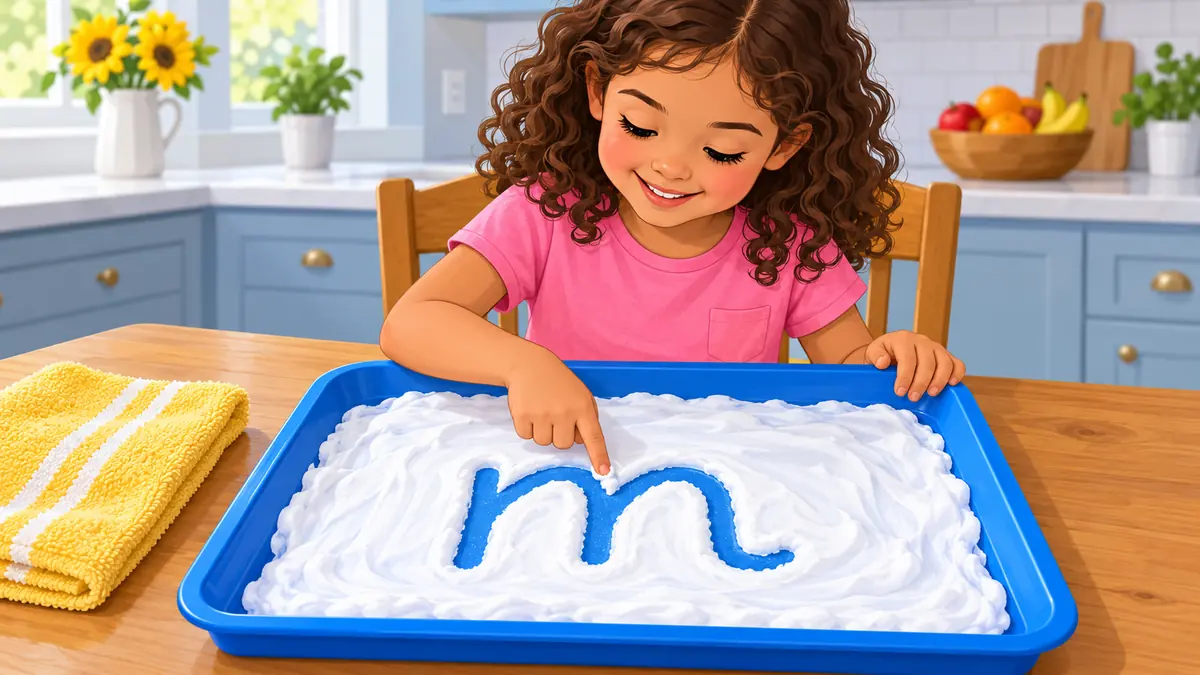
- How: write letters in shaving cream, sand or salt, or roll them from playdough before using a pencil.
- Say: “Draw it big with your finger first.”
Use Helpful Paper
Ages 5 to 7
- How: three-line paper with a dashed middle, or highlight the bottom line so letters have a floor to sit on.
- Say: “Letters sit on the green grass.”
Use a Spaceman for Spacing
Ages 5 to 7
- How: decorate a craft stick and place it after each word to mark the gap.
- Say: “Time for the spaceman!”
Practice Little and Often
Ages 3 to 7
- How: five to ten minutes a day, ending before your child gets tired.
- Say: “Three neat letters, then we're done.”
Praise One Specific Thing
Ages 3 to 7
- How: point out one improvement, such as a letter that touched the line.
- Say: “Your g went right under the line. Great job!”

A vertical surface feels like a treat to most kids, and it quietly strengthens the wrist. Messy sensory play does the same for letter movements:
Spacing is usually the last skill to click. The spaceman stick makes it visible and helps improve handwriting on lined paper:
Free Worksheets to Improve Handwriting
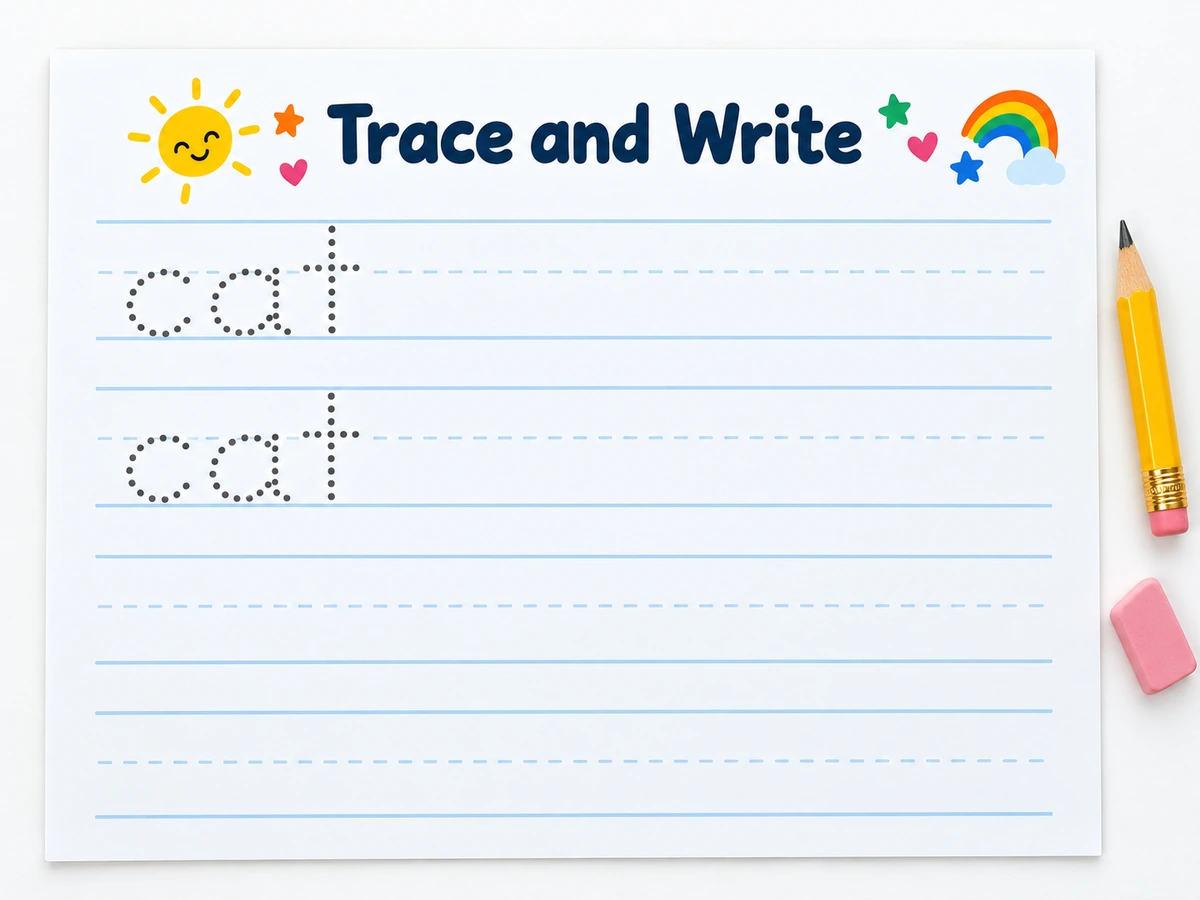
Worksheets are a great way to improve handwriting once the building blocks are in place. Kidzolearn's tracing worksheets give kids a clear starting point and a path to follow. They're free, need no login and print on US Letter or A4 with “Fit to page” on.
Free Handwriting Worksheets for Ages 3 to 7
Pre-writing lines, shapes, letters and numbers. Print as many as you like.
How to use them
- Check posture and grip before starting.
- Trace each letter twice, copy it twice, then write it once from memory.
- Circle your child's best letter on each page.
Small Steps, Steady Progress
You don't need fancy programs. Strong hands, a comfortable setup, a few clear letter habits and short daily practice are what improve handwriting over time. Celebrate the small wins, like one letter that finally sits on the line.
When you're ready for practice pages, grab our free alphabet tracing worksheets or browse more free printable worksheets for kids.