The best way to teach sight words isn't endless flashcards. It's helping your child sound out the parts of a word they can, and learn only the tricky part by heart.
Your kindergartener comes home with a list: the, said, was, you, of. You drill them every night. By Friday they know “the”… and read “was” as “saw” for the fifth time. If that sounds like your house, you're in good company, and there's a much easier way.
This guide shows how to teach sight words step by step: what they are, which ones to start with, the simple heart word method reading experts now recommend, 10 games your child will actually ask to play, a weekly plan and free worksheets.
Quick takeaways
- Most sight words can be sounded out. Only part of a few words is tricky.
- Learn the tricky part “by heart” and decode the rest.
- Kindergartners do well with about three new heart words a week.
- To teach sight words well, five playful minutes a day beat a long drill.
What Are Sight Words? (And Why It Matters How You Teach Sight Words)
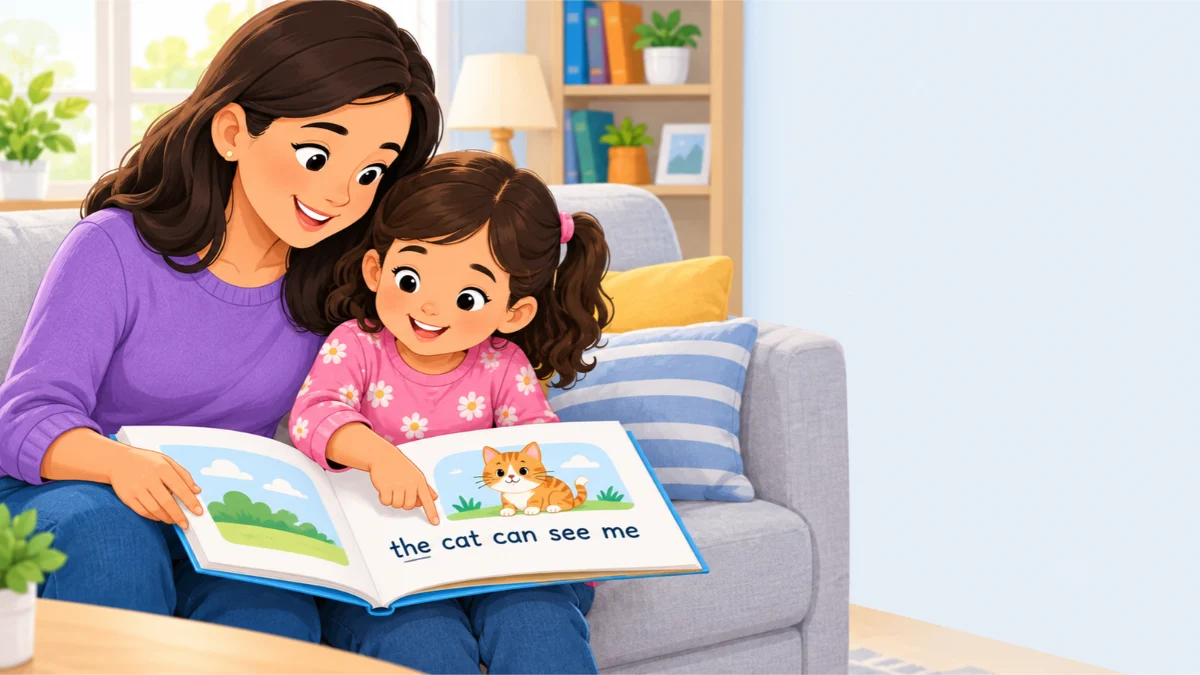
“Sight words” (also called high-frequency words) usually means the most common words in children's books, like the, and, is and you. The goal is for kids to read them instantly, without stopping, so they can focus on the story.
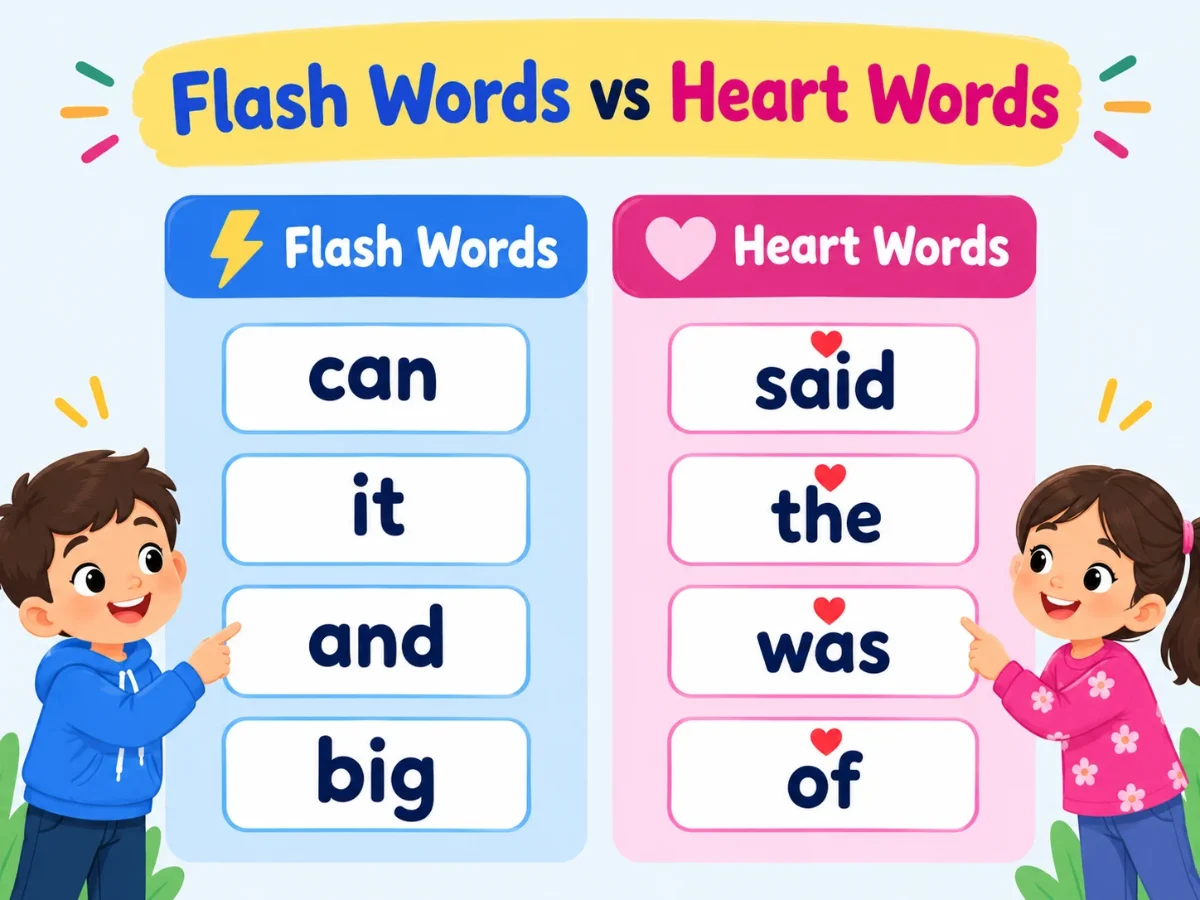
Here's what changed. Many parents assume every sight word must be memorized as a picture. In fact, most can be sounded out. Reading Rockets sorts them into two groups:
⚡ Flash words
Follow regular phonics, so kids can sound them out: can, it, and, big. They just need practice so they're read “in a flash.”
❤️ Heart words
Have one tricky part that has to be learned by heart: said, the, was, of. The rest of the word still follows the rules.
Knowing this changes how you teach sight words. Instead of memorizing hundreds of word shapes, your child learns letter sounds, decodes most of each word and remembers only the odd bits.
How to Teach Sight Words: The Heart Word Method in 6 Steps
This is the method many teachers now use to teach sight words. It takes about five minutes per word, and kids love drawing the hearts.
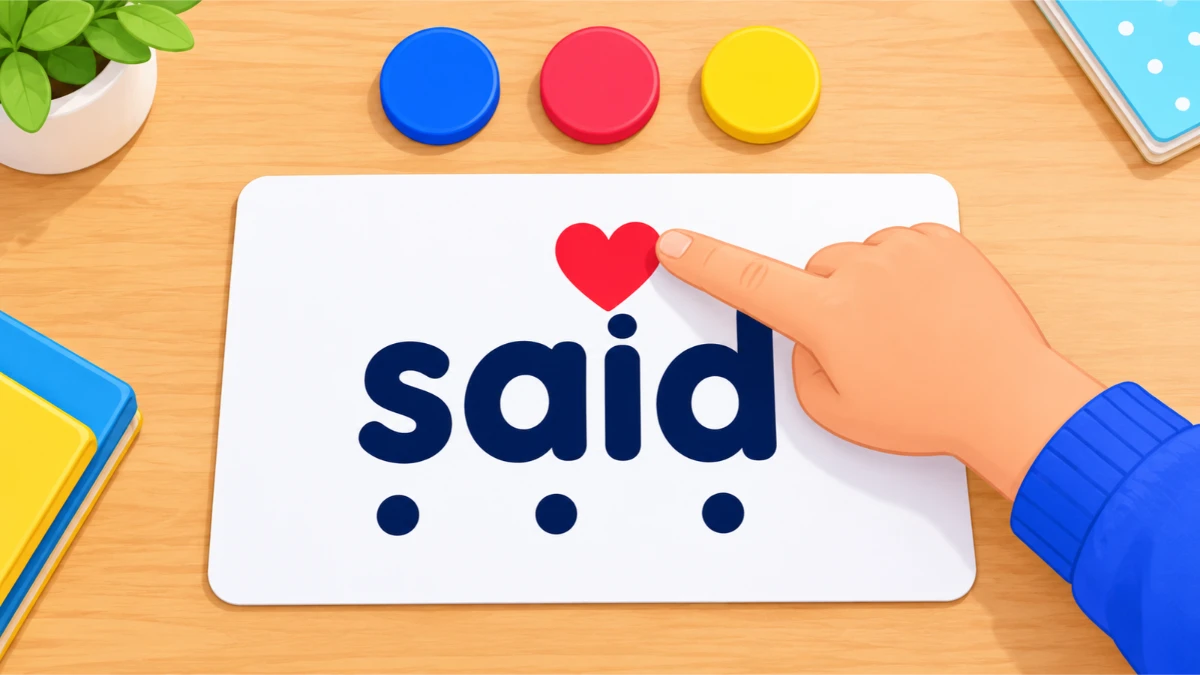
Each box is one sound. Blue dot = sound it out. Red heart = learn this part by heart.
Say the word
Say it and use it in a sentence: “said. Mom said hello.”
Tap the sounds
Have your child say each sound while tapping a finger: /s/ /e/ /d/. Said has three sounds.
Match sounds to letters
Write the word and put a dot under each sound. The s and d match their sounds.
Find the tricky part
The middle sound /e/ is spelled “ai.” That's the surprise, so draw a heart above it.
Write it
Your child writes the word while saying each sound, then traces the heart part in a different color.
Read it in a sentence
Find the word in a book or write a short sentence together. Reading it in context makes it stick.
Use the same six steps each time you teach sight words. After a few weeks, many kids start spotting the tricky parts on their own and asking, “Where does the heart go?”
💡 Tip: some words are only tricky for now. “see” is a heart word until your child learns that ee says /ē/. Then it becomes a flash word. Celebrate when that happens.
Which Sight Words to Teach First
When you first teach sight words, start with a few easy flash words for quick wins, then add the most common heart words a few at a time. Many teachers use the Dolch pre-primer list or the words in your child's school list. Here's a simple starter set of sight words for kindergarten:
| Words | Type | What to notice |
|---|---|---|
| I, a | Flash (one letter) | Easy first wins |
| can, it, is, and, big, up | Flash | Sound them out with short vowels |
| the | Heart | The e doesn't say its usual /e/ sound |
| to, do | Heart | o says /oo/ |
| said | Heart | ai says /e/ |
| was | Heart | a says /u/ and s says /z/ |
| you | Heart | ou says /oo/ |
| of | Heart | f says /v/ |
Group words by pattern when you can. Learning can, man and ran together is easier than three random words, and it's one of the simplest ways to teach sight words faster. If your child's school sends home a list, use theirs and sort it into flash and heart words yourself.
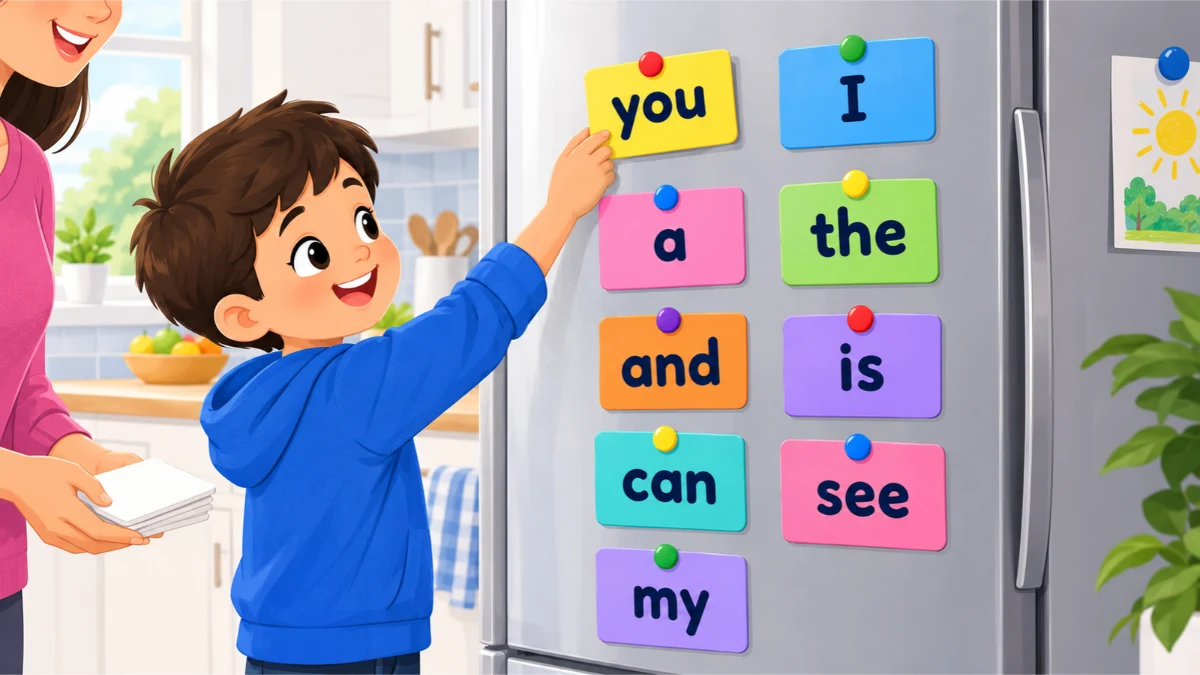
A small word wall on the fridge helps your child see the words every day. Add each new word as it's learned, and let your child stick it up.
10 Fun Games to Teach Sight Words at Home
Games are the most fun way to teach sight words, because they give kids the repeated practice they need without the groans. Each of these takes 5 to 10 minutes. Rotate two or three a week so they stay fresh.
Sight Word Hopscotch
Chalk words in each square. Your child reads the word before jumping on it.
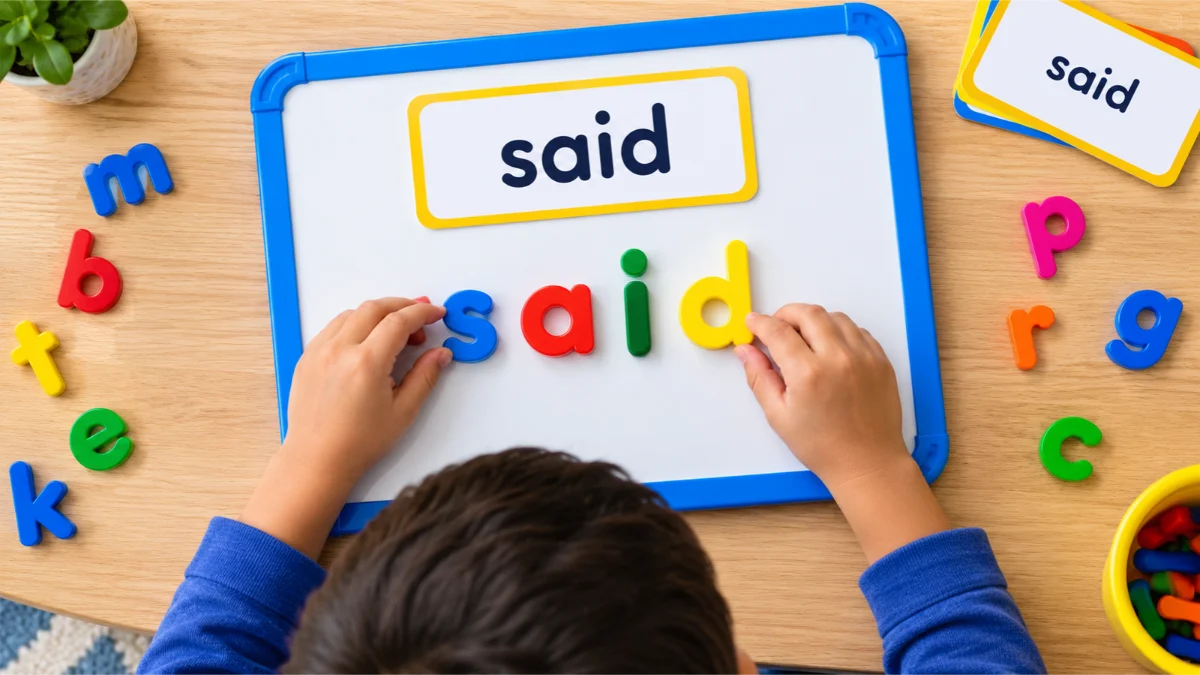
Magnetic Letter Build
Show a word card and build it with magnetic letters, saying each sound.
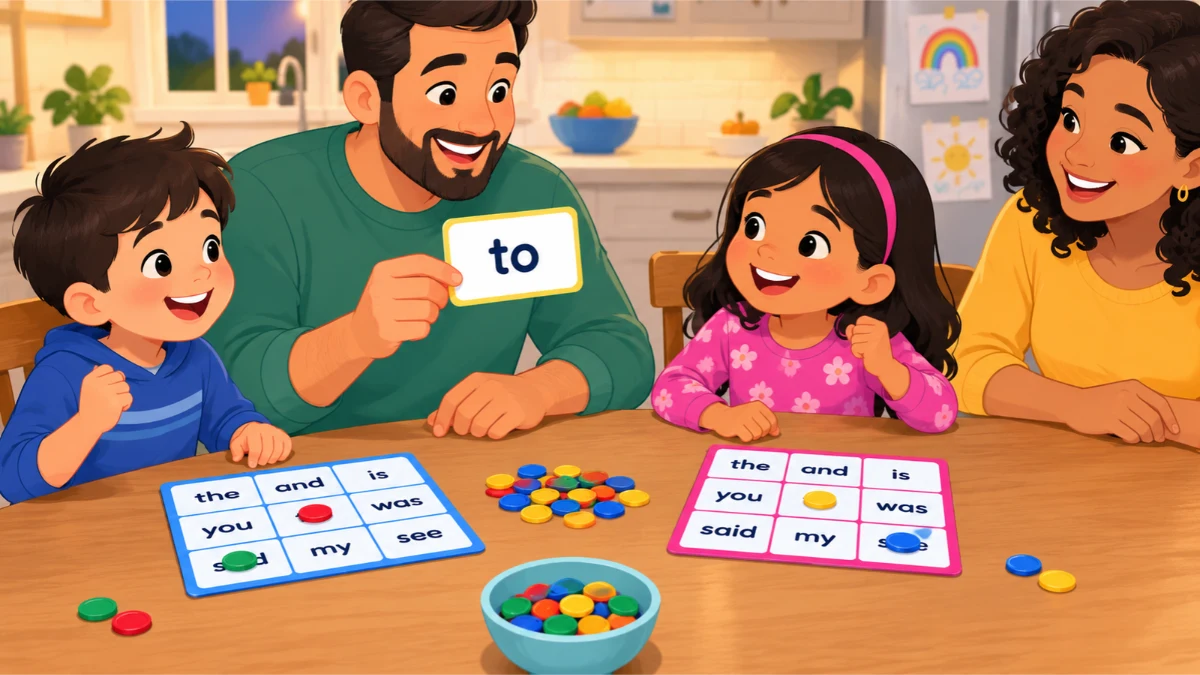
Sight Word Bingo
Make 3x3 cards with this week's words. Read words aloud and cover them.
Flashlight Hunt
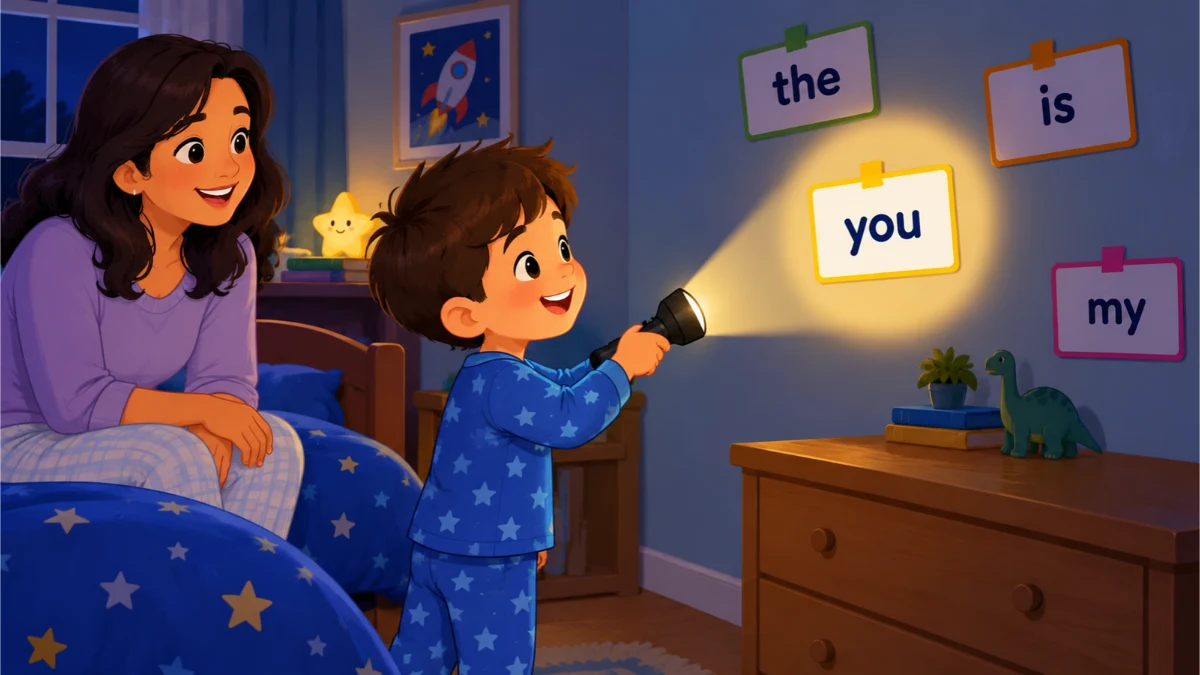
Tape words around a dim room. Your child finds them with a flashlight and reads each one.
Rainbow Writing
Trace a word three times in three colors, saying the sounds each time.
Book Detective
Pick one word and count how many times it appears on a page of a favorite book.
Swat the Word
Lay word cards on the floor. Call one out and your child swats it with a fly swatter.
Silly Sentences
Make funny sentences together with this week's words: “The cat said moo!”
Go Fish
Make two cards for each word and play Go Fish, reading each card you ask for.
Read Real Books
Choose simple readers full of this week's words, and let your child read them to you.
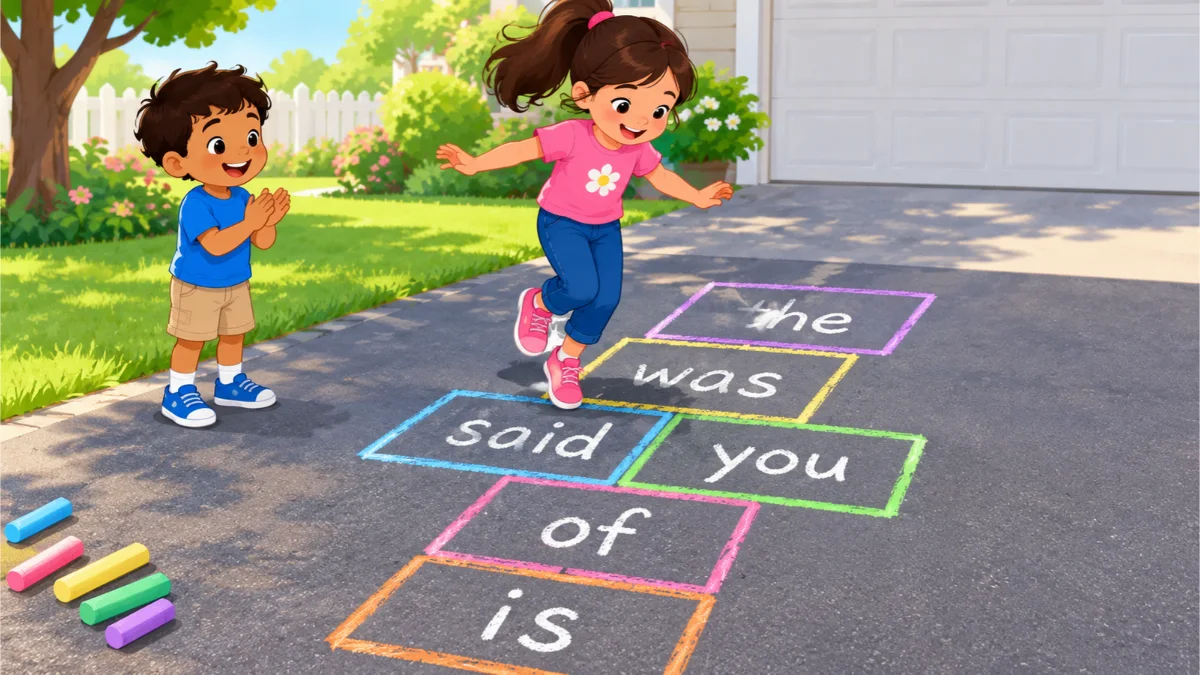
Hopscotch is perfect for kids who can't sit still. For careful spellers, building words letter by letter works well:
Bingo and Go Fish turn practice into family time, and siblings of different ages can play together:
The flashlight hunt is a bedtime favorite, and an easy way to review the week's words:
⚠️ Safety note: small magnetic letters and game counters can be a choking risk for younger siblings. Keep them out of reach of children who still put things in their mouth.
Free Worksheets to Teach Sight Words
Worksheets are a great last step when you teach sight words. After a game, one page helps your child read, trace and write the week's words. Kidzolearn's sight word worksheets are free, need no login and print on US Letter or A4 with “Fit to page” on.
Free Sight Word Worksheets for Kindergarten
Color, trace, write and match the most common words. Print as many as you like.

How to use them
- Map the word with the heart method first, then do the worksheet.
- Have your child say each sound while tracing.
- Color the tricky part red, just like the heart.
A Few Words at a Time
You don't need hours of drills to teach sight words. Sound out what you can, put a heart on the tricky part, play a quick game most days and read real books together. Before long, “the” and “said” will be words your child reads without a second thought.
When you're ready, print a few of our free sight word worksheets or browse more free printable worksheets for kids.