10 Fun Ways to Teach Shapes to Preschoolers (Free Printable Worksheets)
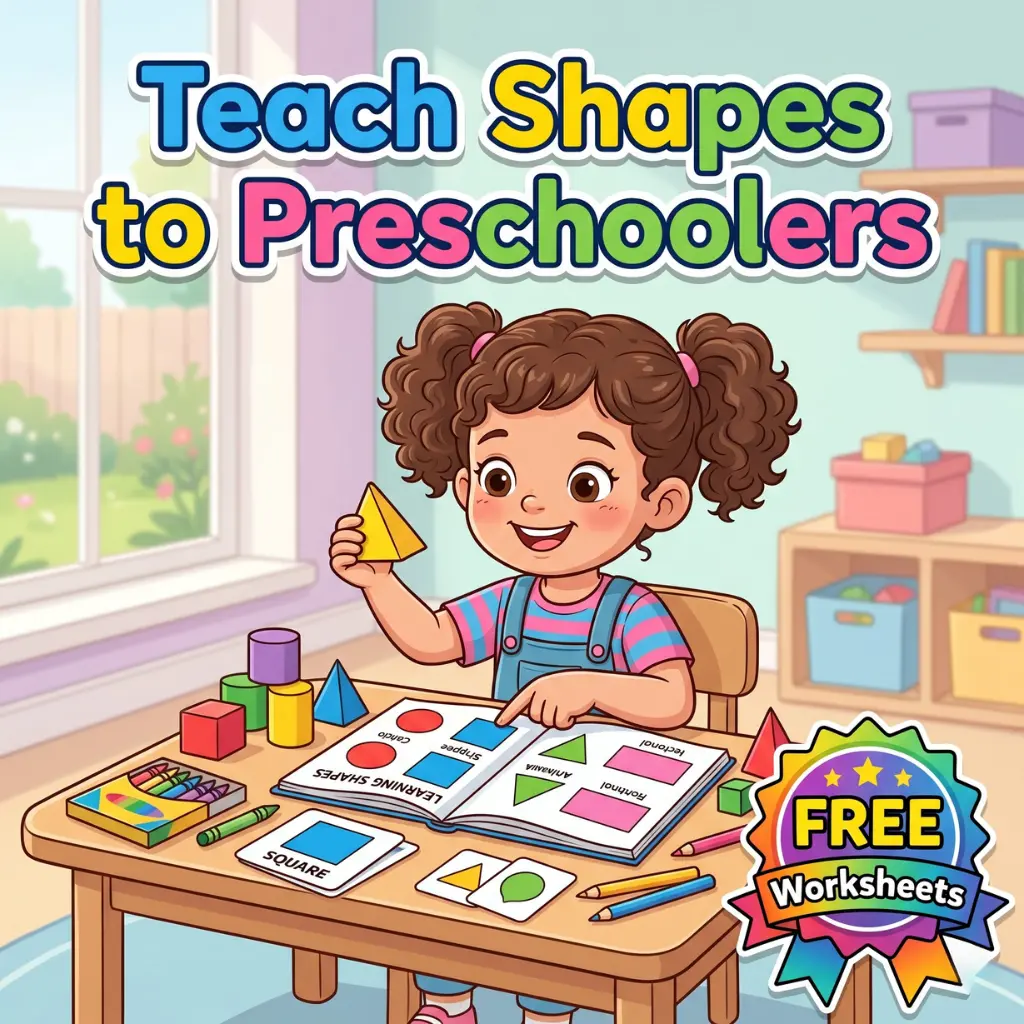
The easiest way to teach shapes to preschoolers is to make it feel like play, not a lesson. Children aged 3 to 7 learn best through movement, games, colouring and hands-on activities, so a triangle your child builds from ice-cream sticks is remembered far longer than one on a flashcard.
Shapes aren’t only a maths topic, either. Many children start naming a circle, a square and a triangle somewhere between 3 and 4 years, and a few months either side is completely normal. That early shape sense quietly supports reading, writing, spatial thinking and problem-solving for years to come.
In this guide you’ll find 10 parent-friendly ways to teach shapes to preschoolers at home or in a Nursery, LKG or UKG classroom, plus free printable shapes worksheets you can download instantly from Kidzolearn.
Why Teach Shapes to Preschoolers Matters
Before we get to the activities, here’s why shape learning deserves a spot in your child’s day. Shapes sit right alongside counting and sorting as one of the first building blocks of early maths. The National Association for the Education of Young Children (NAEYC) shares many classroom ideas for exactly this, from spotting shapes around the room to comparing big and small versions of the same shape.
When children learn to identify shapes, they’re also:
- Training their eyes to notice small differences, the same skill that later helps them tell b from d and p from q.
- Building spatial reasoning: understanding position, size and how pieces fit together, which feeds straight into maths and science.
- Learning to sort and group objects by their features, an early logical-thinking skill.
- Picking up describing words like round, straight, corner, side and curved.
- Practising the lines and curves they’ll need for handwriting. Our guide to pre writing strokes shows how a circle, a cross and a triangle turn into letters.
So shape recognition is much more than a nice extra. When you teach shapes to preschoolers through play, you’re building maths, reading and writing skills all at once.
Which Shapes Should You Teach First?
Don’t try to cover ten shapes in a week. The best way to teach shapes to preschoolers is in a fairly natural order, from the simplest outline to the trickiest:
- Circle: no corners, no sides, easy to spot everywhere.
- Square: four equal sides and four corners.
- Triangle: three sides, three corners.
- Rectangle: like a square, but with two long sides and two short sides.
- Oval, star, heart and diamond: fun shapes children love once the basic four feel easy.
- Pentagon, hexagon and 3D shapes (sphere, cube, cone): best kept for UKG and kindergarten, around 5 to 6 years.
Every child moves at their own pace, so treat these ages as rough ranges, not deadlines. If you’d like a wider picture of what’s typical at each age, the CDC’s developmental milestones checklists are a helpful reference for parents.
10 Fun Ways to Teach Shapes to Preschoolers
1. Start with the Basic Four
One of the most common mistakes parents make when they first try to teach shapes to preschoolers is jumping straight to ovals, pentagons, and stars. That’s like teaching a child to run before they can walk.
Start simple. Circle, square, triangle, and rectangle — these four are your foundation. They are the most visually distinct from each other, and more importantly, your child already sees them everywhere without realising it.
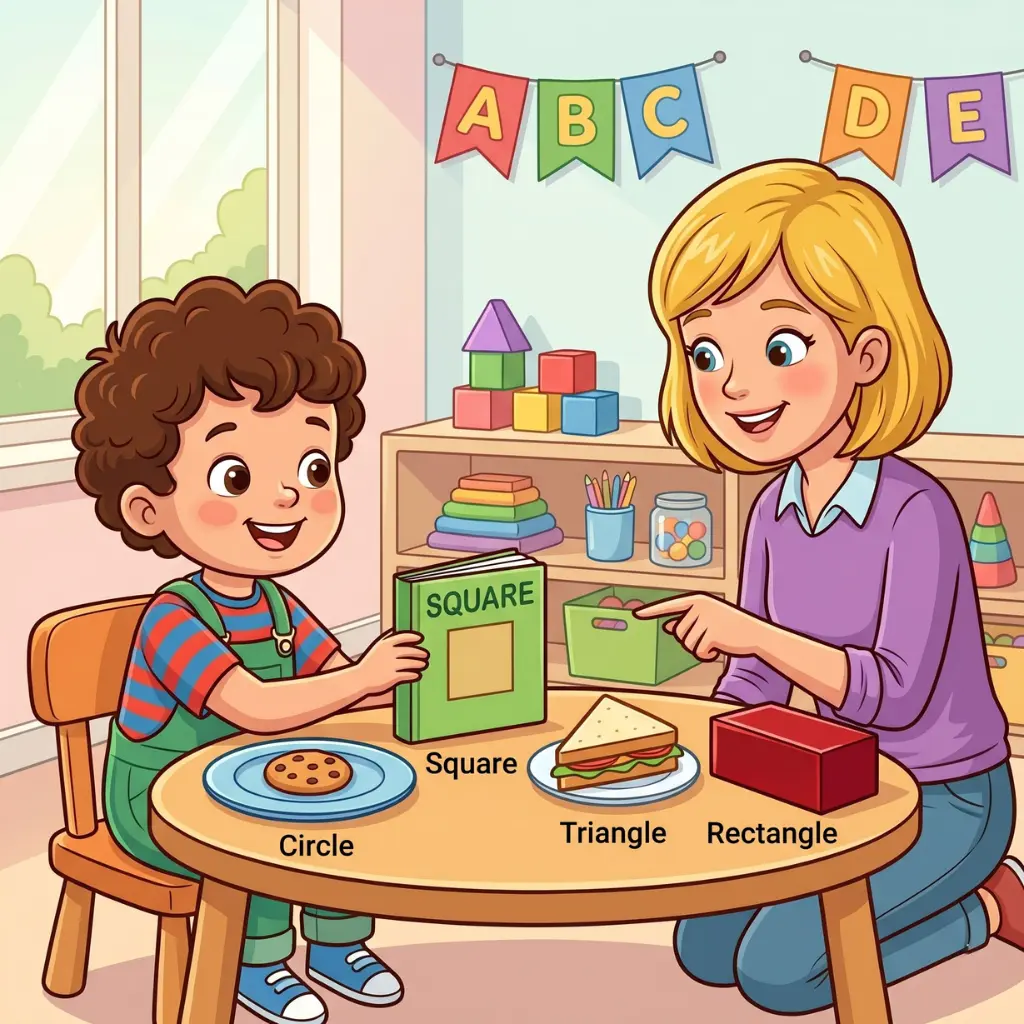
Here’s a trick that works really well: turn breakfast into a shape lesson. A round plate? Circle. A slice of toast? Square. A sandwich cut corner to corner? Triangle. You are not sitting down for a “lesson” — you are just talking about what’s already in front of them. That’s exactly how young children learn best.
Once circle, square, triangle, and rectangle feel familiar — when your child can name them without thinking — then you move on. Not before.
2. Use Free Printable Shape Worksheets
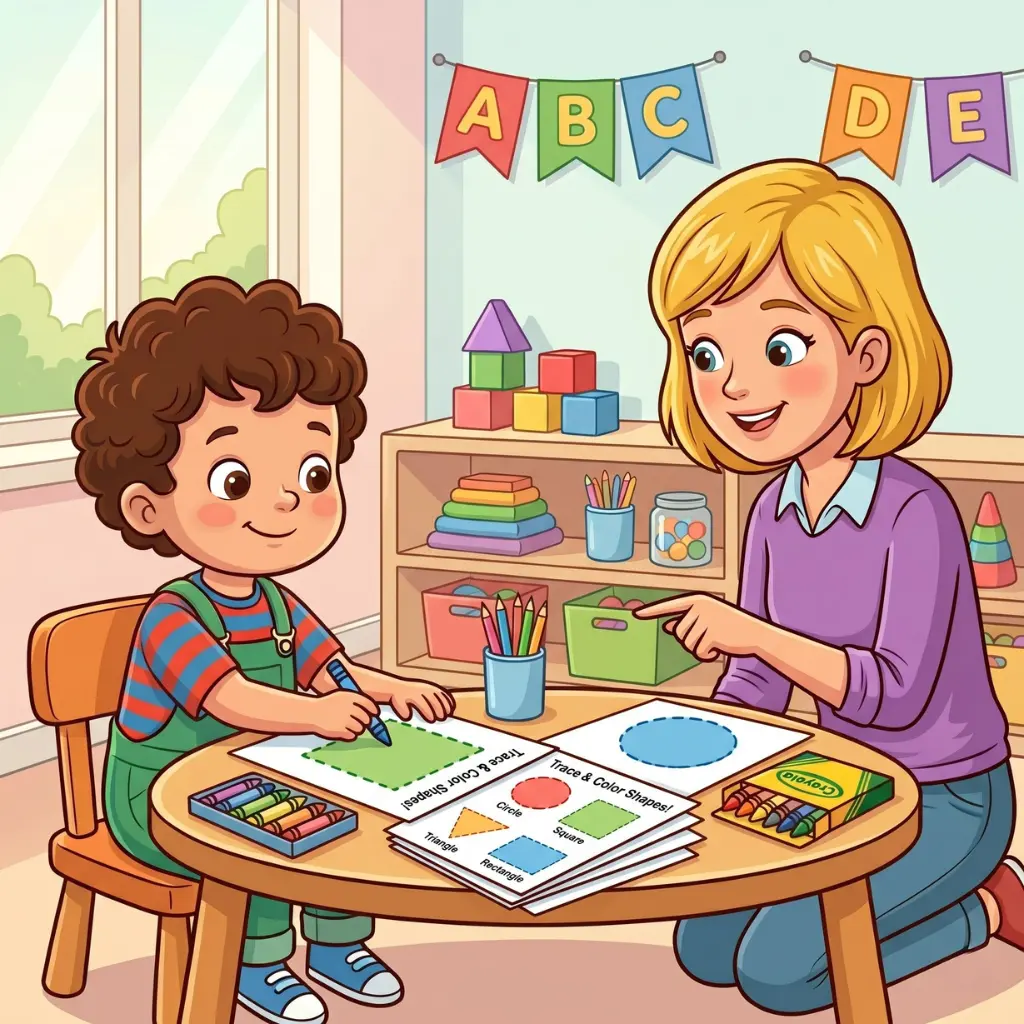
Structured worksheet practice is one of the most effective ways to teach shapes to preschoolers because it combines visual recognition with hands-on tracing. At Kidzolearn, we offer free printable shapes worksheets covering tracing, colouring, identification, and matching — all designed for preschool hands.
Download our free shapes worksheet and add one to your daily routine — even 10 minutes of focused worksheet practice builds lasting shape knowledge
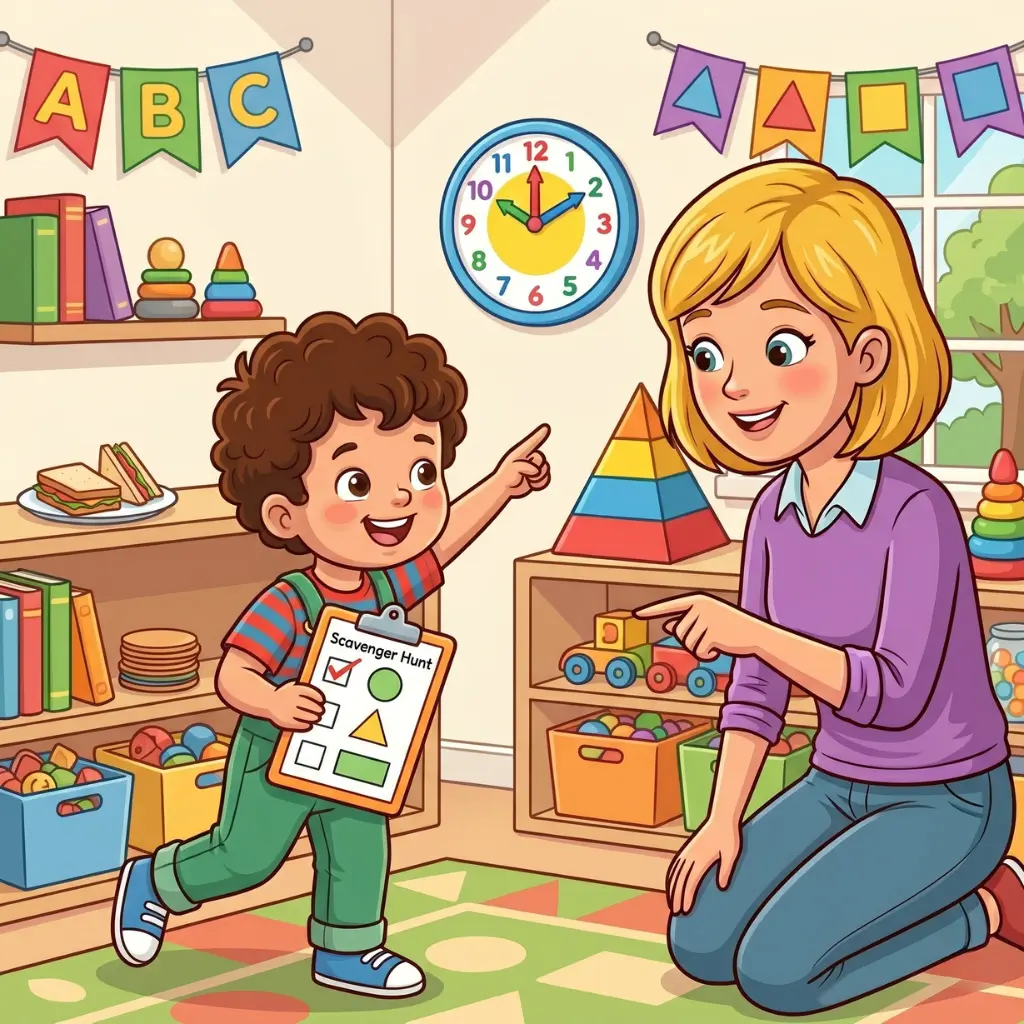
3. Shape Scavenger Hunt Around the House
Turn learning into an adventure. Challenge your child to find 3 circles, 2 rectangles, and 1 triangle somewhere in the house before dinner. A clock face, a window, a book spine — everyday objects become a geometry lesson when you look at them the right way.
This activity directly addresses one of the shape activities recommended by child experts — connecting abstract shape names to real-world objects the child encounters daily.
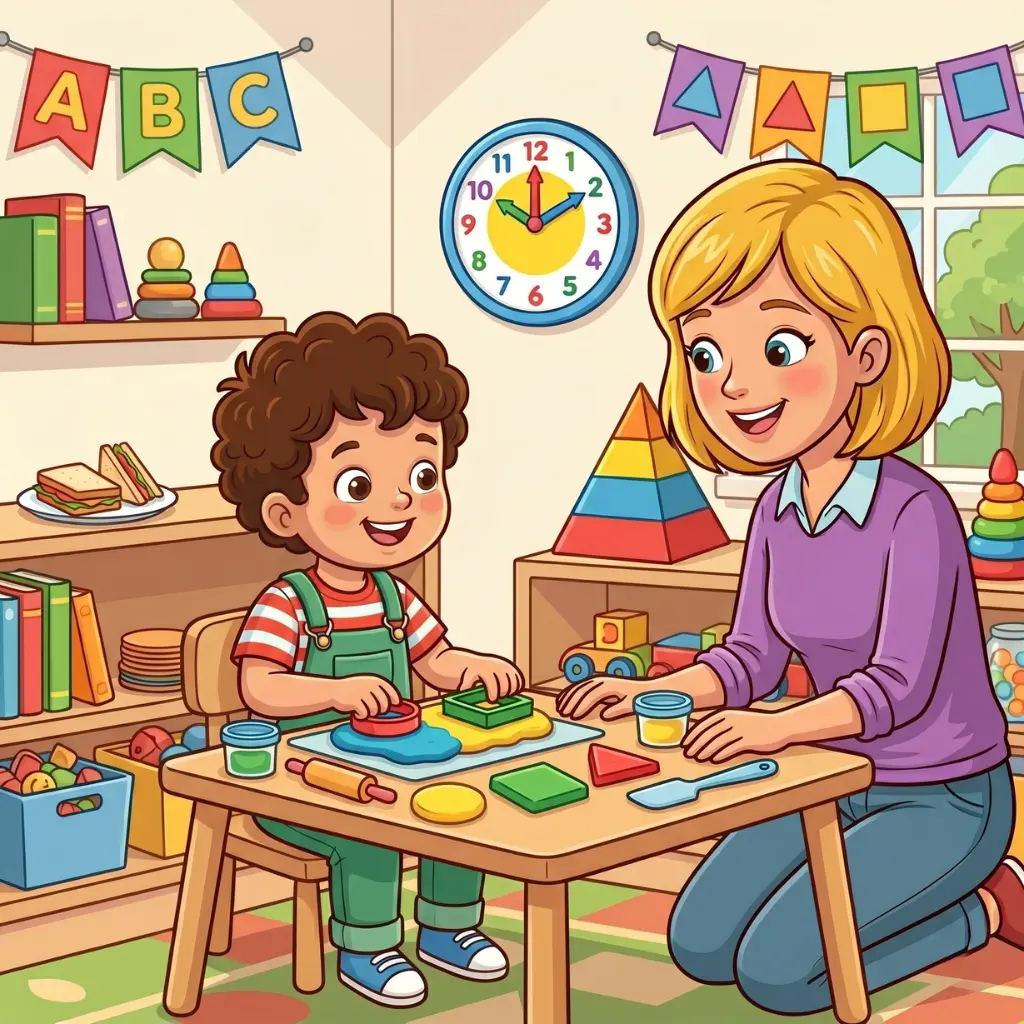
4. Playdough Shape Making
Give your child a ball of playdough and ask them to roll it into a circle, flatten it into a square, or pinch it into a triangle. It is one of the most hands-on, screen-free ways to teach shapes to preschoolers who learn best through touch.
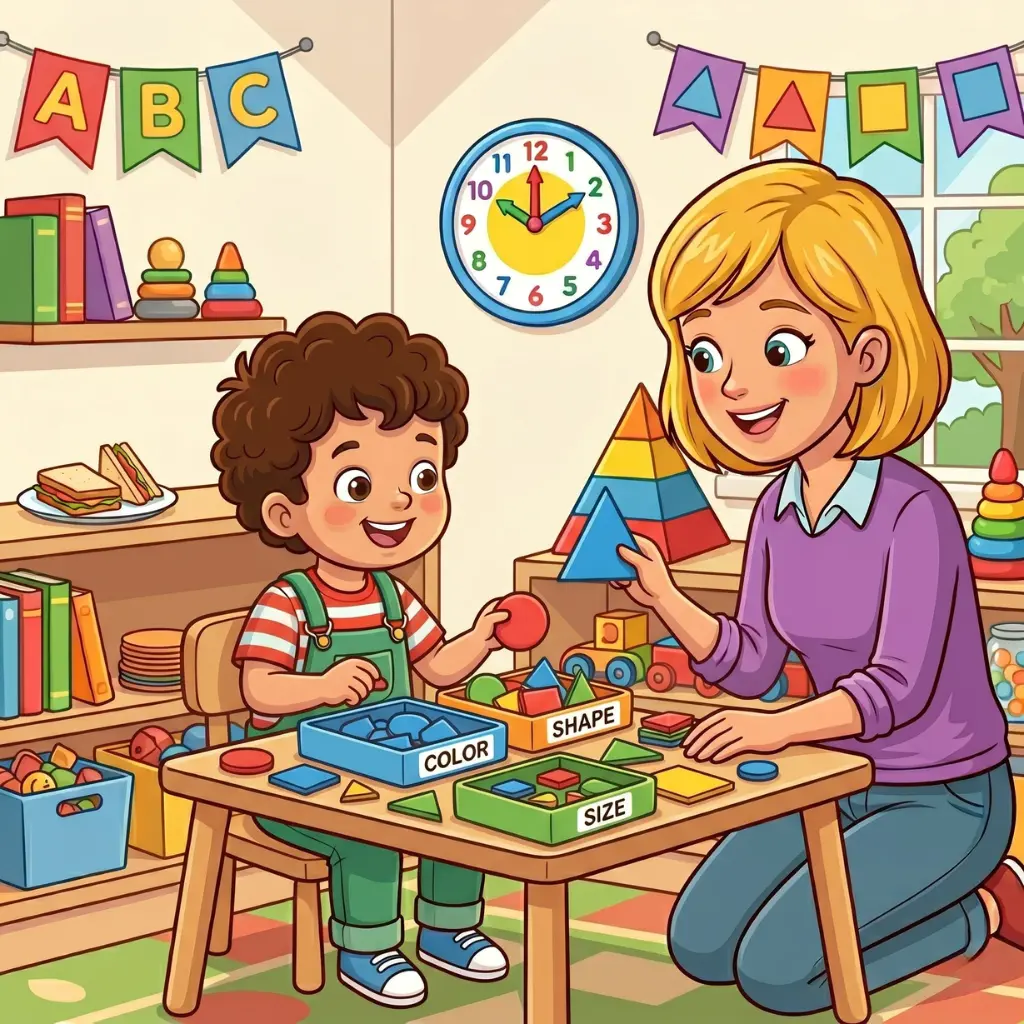
5. Shape Sorting Activities
Cut different shapes from cardboard or foam in various sizes and colours. Ask your child to sort them by shape name first, then by colour, then by size. This progressive sorting builds classification skills alongside shape recognition
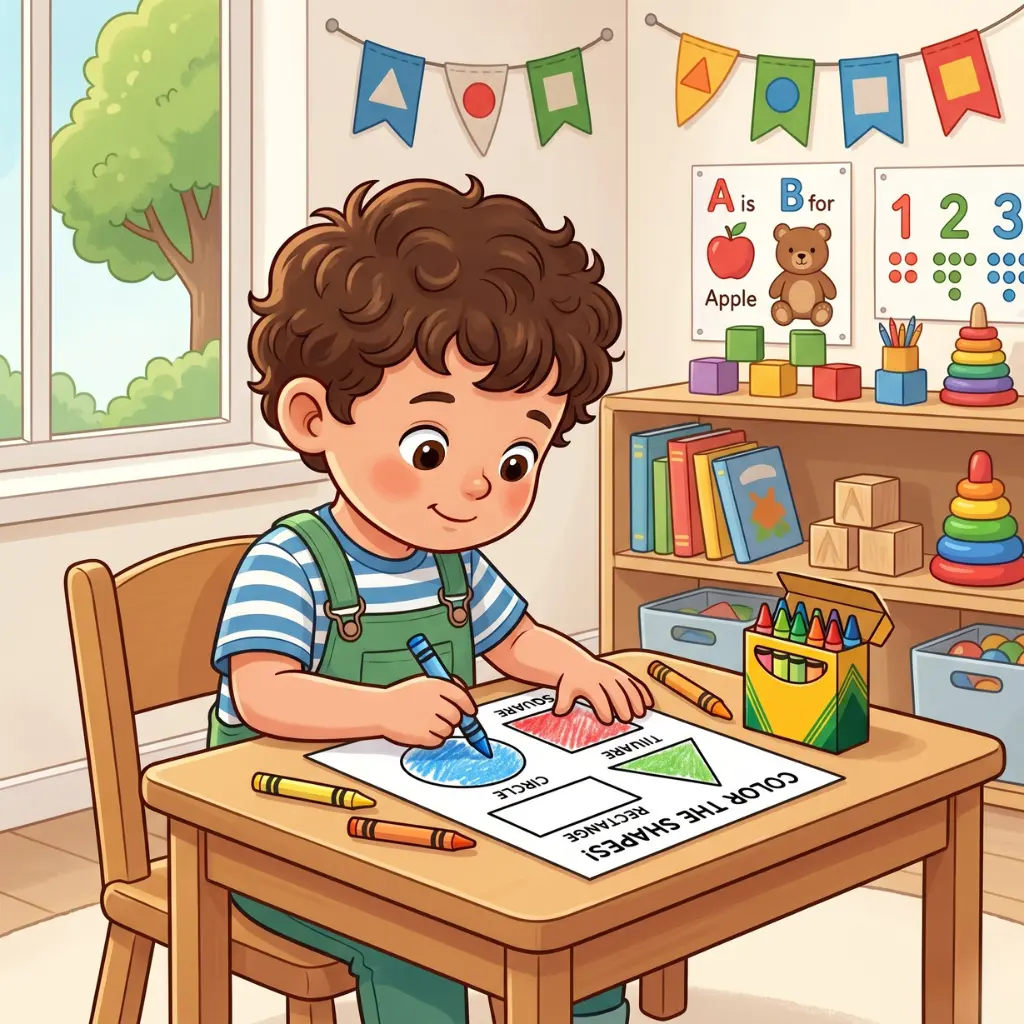
6. Colouring Shapes Pages
Colouring shape worksheets gives children focused, calm practice identifying and staying within the outline of each shape. Our free colouring pages for shapes at Kidzolearn let children colour each shape type a different colour — combining colour recognition with shape learning in one activity.
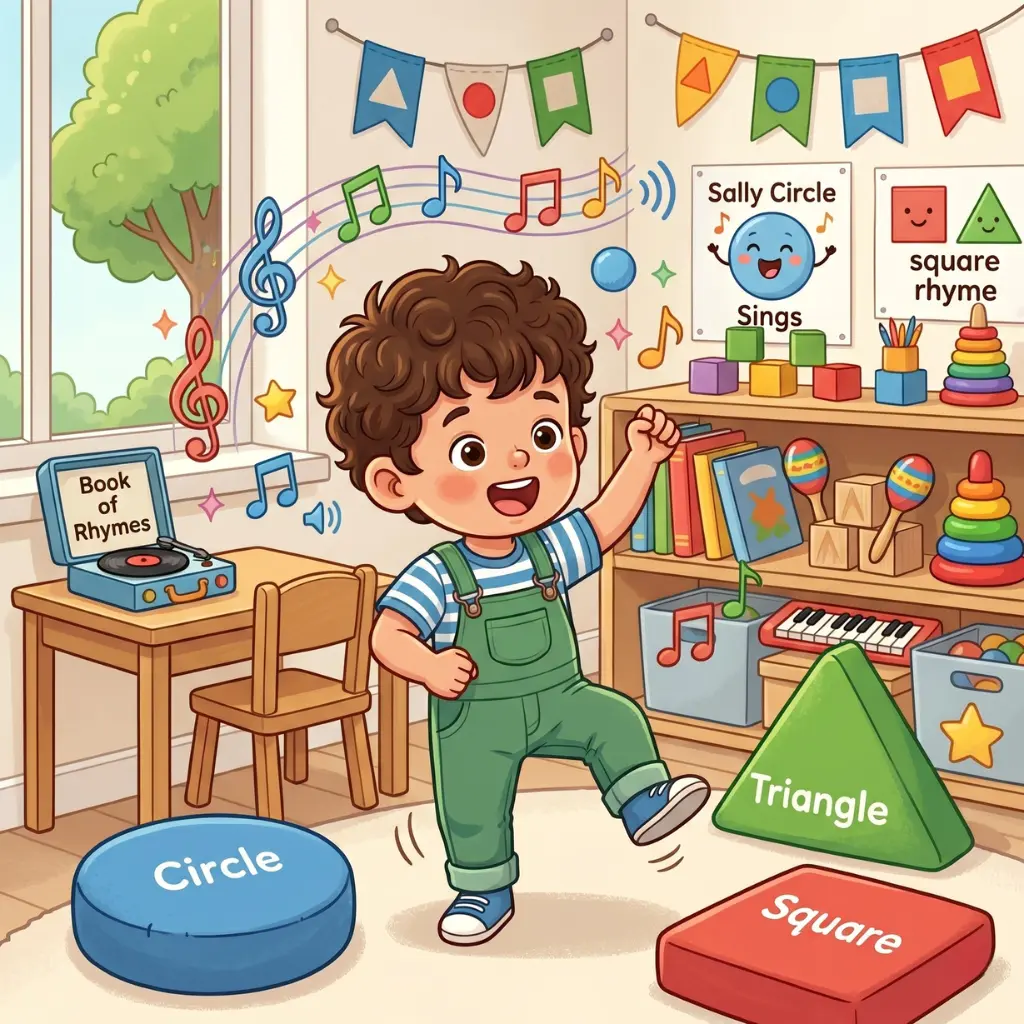
7. Shape Songs and Rhymes
Music is one of the fastest pathways to a young child’s memory. Simple shape songs that describe how to draw each shape — ‘Start at the top and go all around, the circle shape is what we’ve found!’ — help children remember both the name and the form of each shape.
Songs work brilliantly alongside worksheets — together they cover every learning style when you teach shapes to preschoolers at home.
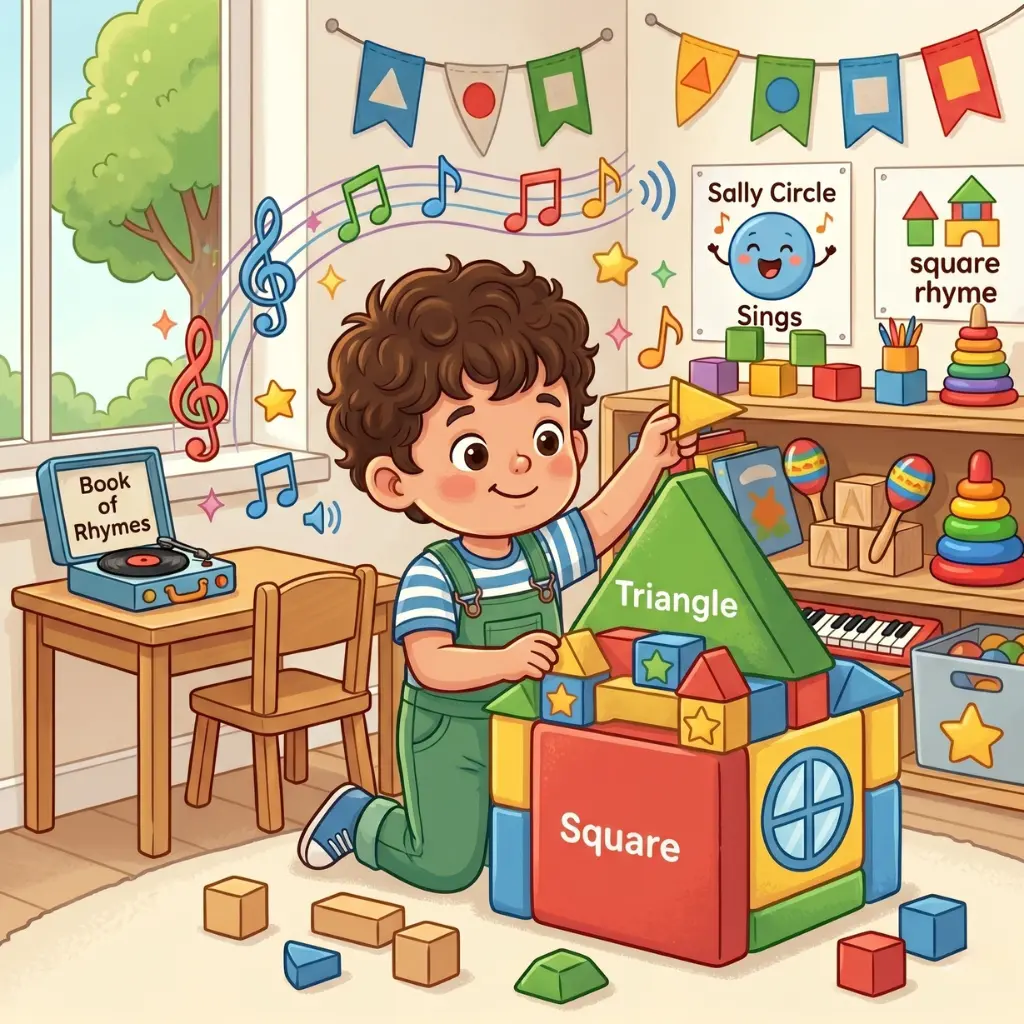
8. Block Building and Construction Play
LEGO bricks, wooden blocks, and stacking toys are all geometry lessons in disguise. While your child builds a tower or a house, point out the shapes they are using: ‘Look — you used a rectangle for the wall and a triangle for the roof!’ This casual narration builds shape vocabulary without any pressure — and it’s one of the most natural ways to teach shapes to preschoolers during everyday play.
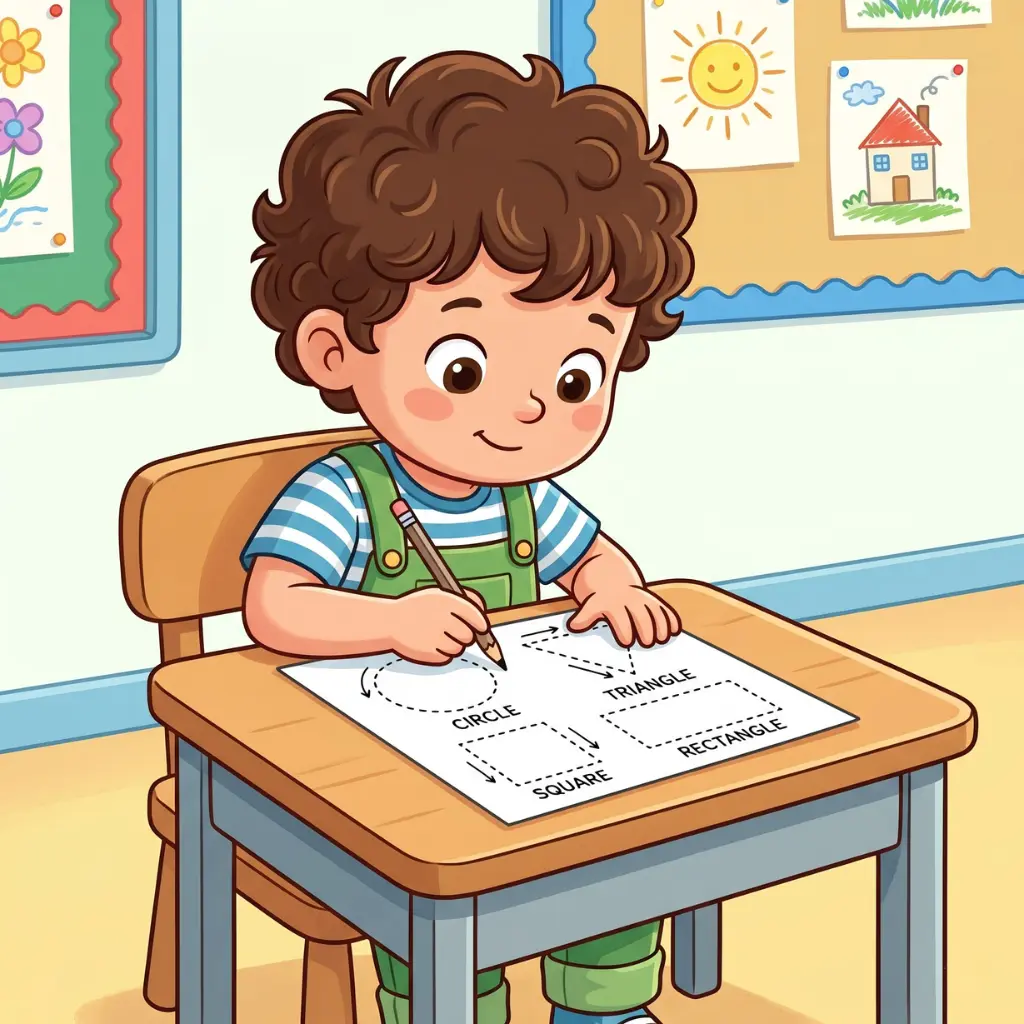
9. Shape Tracing Worksheets with Dotted Lines
Dotted-line tracing worksheets let children feel the edges and angles of each shape through guided movement before they try drawing independently. Our shape tracing worksheets at Kidzolearn use clear directional arrows and large letterforms designed specifically for preschool hands.
Tracing is particularly powerful because it builds the fine motor control children need for both shape drawing and letter writing — making it a two-for-one developmental win.
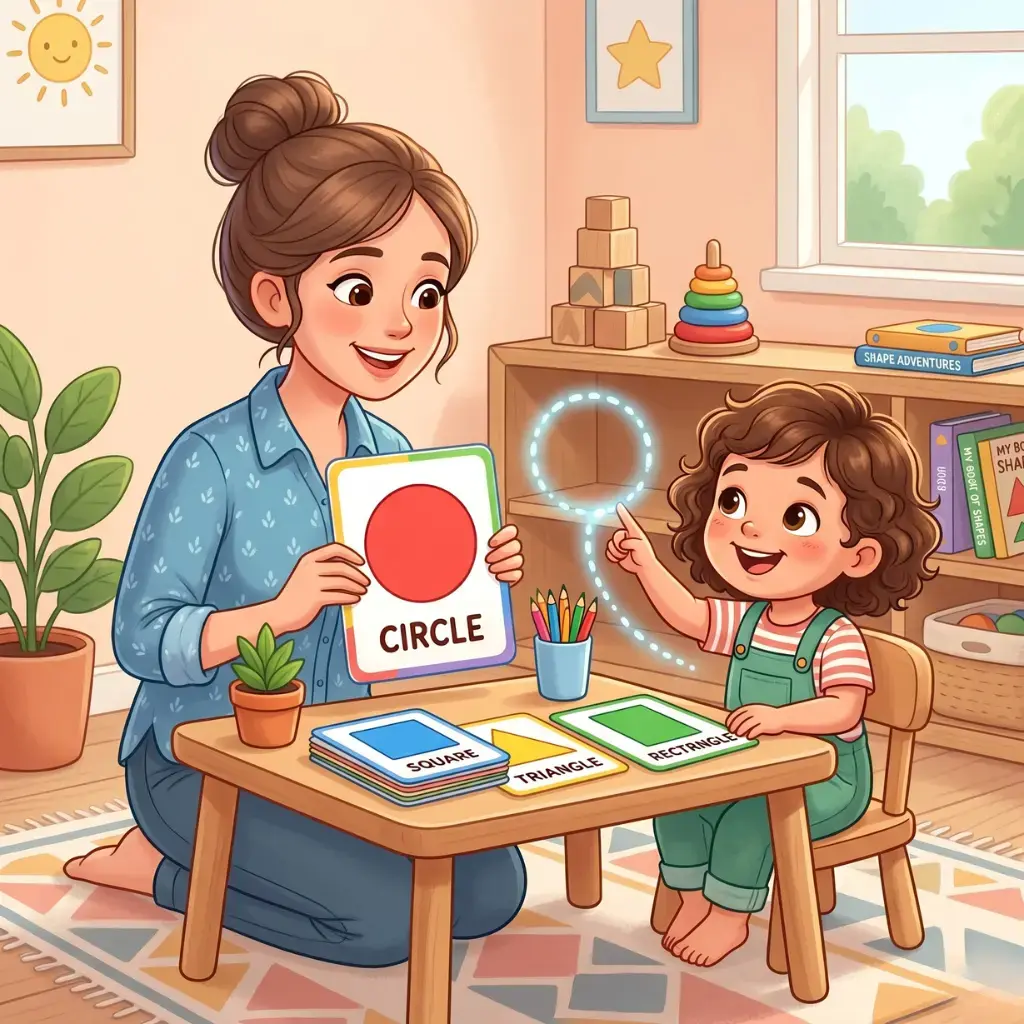
10. Shape Flashcard Quick Reviews
Five-minute flashcard sessions before meals or at bedtime are surprisingly powerful. Show a shape card, name it together, and ask your child to draw it in the air with their finger. Rotate through all cards each week so no shape is forgotten once learned.
A Simple 5-Day Plan to Teach Shapes to Preschoolers
If you’re not sure where to start, try this routine for one shape per week. Ten minutes a day is plenty.
- Monday: Shape hunt around the house.
- Tuesday: Make the shape with playdough or atta dough.
- Wednesday: Build it with ice-cream sticks or straws.
- Thursday: Trace it in a rava or salt tray.
- Friday: One printable worksheet, then draw the shape on blank paper.
At the weekend, keep it light with shape snacks or a shape collage. The following week, move to the next shape and mix in the ones your child already knows.
Common Mistakes Parents Make When Teaching Shapes
Even with the best intentions, a few common habits can slow down shape learning — or make it feel like a chore for your child. Here’s what to watch out for:
Teaching too many shapes at once. It’s tempting to cover everything quickly, but introducing five or six shapes in one week overwhelms young children. Stick to one or two at a time.
Only using worksheets. Worksheets are brilliant — and we have plenty of free ones at Kidzolearn — but they work best as one part of a varied routine. If every shape session starts with “sit down and do this sheet,” some children will start to resist. Mix in songs, games, and real-world hunts.
Skipping revision. Teaching triangle in week 3 and never returning to it is a common mistake. Young children need repeated exposure over time — not just once. Bring back old shapes in new activities every week.
Correcting too firmly. If your child calls a rectangle a square, don’t make it a big deal. Say “oh, good try — this one has two longer sides and two shorter sides, so it’s a rectangle — can you say rectangle?” Then move on. Keeping the mood light is half the battle when you’re trying to teach shapes to preschoolers at home.
Comparing to other children. Some 3-year-olds know all their shapes. Others are still working on circle and square at 4. Both are within the normal range. Your child’s pace is their pace — trust the process.
How to Teach Shapes to Preschoolers: Tips for Parents
Here are a few key principles that make all the activities above more effective when you are teaching shapes to preschoolers at home:
Keep sessions to 10–15 minutes. When you teach shapes to preschoolers, short daily sessions outperform long occasional ones every single time.
- Revisit shapes regularly. Do not rush to the next shape before the previous one is solid. Return to earlier shapes in new activities throughout the week.
- Celebrate every recognition. When your child spots a hexagon or draws a diamond from memory, celebrate it genuinely. Positive reinforcement is the fuel of early learning.
- Mix worksheet time with active play. Structured worksheets anchor learning; active games extend and reinforce it. Both are needed for lasting shape knowledge.
Download Free Printable Shapes Worksheets for Kids
Ready to put these ideas into practice? At Kidzolearn, we have a growing library of free printable shape worksheets for preschool and kindergarten children. Our worksheets cover:
- Shape tracing (circle, square, triangle, rectangle, oval, diamond, star, heart, and more)
- Colour-the-shape activities
- Shape identification and matching
- Shape pattern completion
All worksheets are completely free to download and print. No sign-up required.
Frequently Asked Questions
What age should children start learning shapes?
Most children begin recognising basic shapes between ages 2 and 3. By age 4 to 5, with regular practice, most children can draw and name circles, squares, triangles, and rectangles independently.
Which shapes should I teach first?
Start with circle, square, and triangle — they are the most visually distinct. Once these are solid, introduce rectangle, oval, and diamond before moving to more complex shapes like pentagon or hexagon.
What is the easiest method to teach shapes to preschoolers at home?
The easiest method to teach shapes to preschoolers at home is to use everyday objects around the house rather than formal lessons. Point out a circular plate, a rectangular door, or a triangular sandwich and name the shape out loud. Doing this naturally during meals, walks, and playtime — even just 5 minutes a day — builds shape recognition faster than any structured drill. Once your child can name shapes confidently in the real world, move on to tracing worksheets and colouring activities to reinforce what they already know.
How do free printable worksheets teach shapes to preschoolers?
Printable shapes worksheets build visual recognition, fine motor control through tracing, and shape naming through repeated structured practice — all in one single activity session.
Can I teach shapes to preschoolers without buying any materials?
Absolutely — you do not need to spend a single rupee to teach shapes to preschoolers effectively. Household items (plates, books, boxes, food), homemade playdough, cardboard cut-outs, and free printable worksheets from Kidzolearn are everything you need. Our free shapes worksheets cover tracing, colouring, and matching — just print and go. The most important ingredient is consistency, not expensive toys or kits.
How many shapes should I teach at once?
Introduce one or two shapes per week for best results. Teaching too many shapes at once leads to confusion and poor retention. Depth before breadth
Are the Kidzolearn shapes worksheets really free?
Yes! Every shapes worksheet on Kidzolearn is completely free to download as a printable PDF. No account, subscription, or payment required — just click and print.
Final Thoughts: Teach Shapes Through Play
Teaching shapes to preschoolers doesn't need to be complicated or expensive. A ball of playdough, a shape hunt around the house or one simple worksheet is enough, as long as you keep it fun and keep coming back to it.
Ten minutes a day is plenty. Within a few weeks, don't be surprised if your child starts pointing out the circle on the clock, the rectangle of the door and the triangle in every samosa.
✏️ Print your free shapes worksheets
Made for children aged 3 to 7, ready for Nursery, LKG, UKG and home learning.
Keep reading on Kidzolearn
Over to you: which shape did your child learn first, or is there a shape game they love? Share it in the comments below. We read every one.