Free Tracing Lines Worksheets for Preschool
Download free tracing lines worksheets for preschool with dotted straight lines, curves, zigzags and waves. Made for ages 3 to 7 and ready on A4 in seconds.
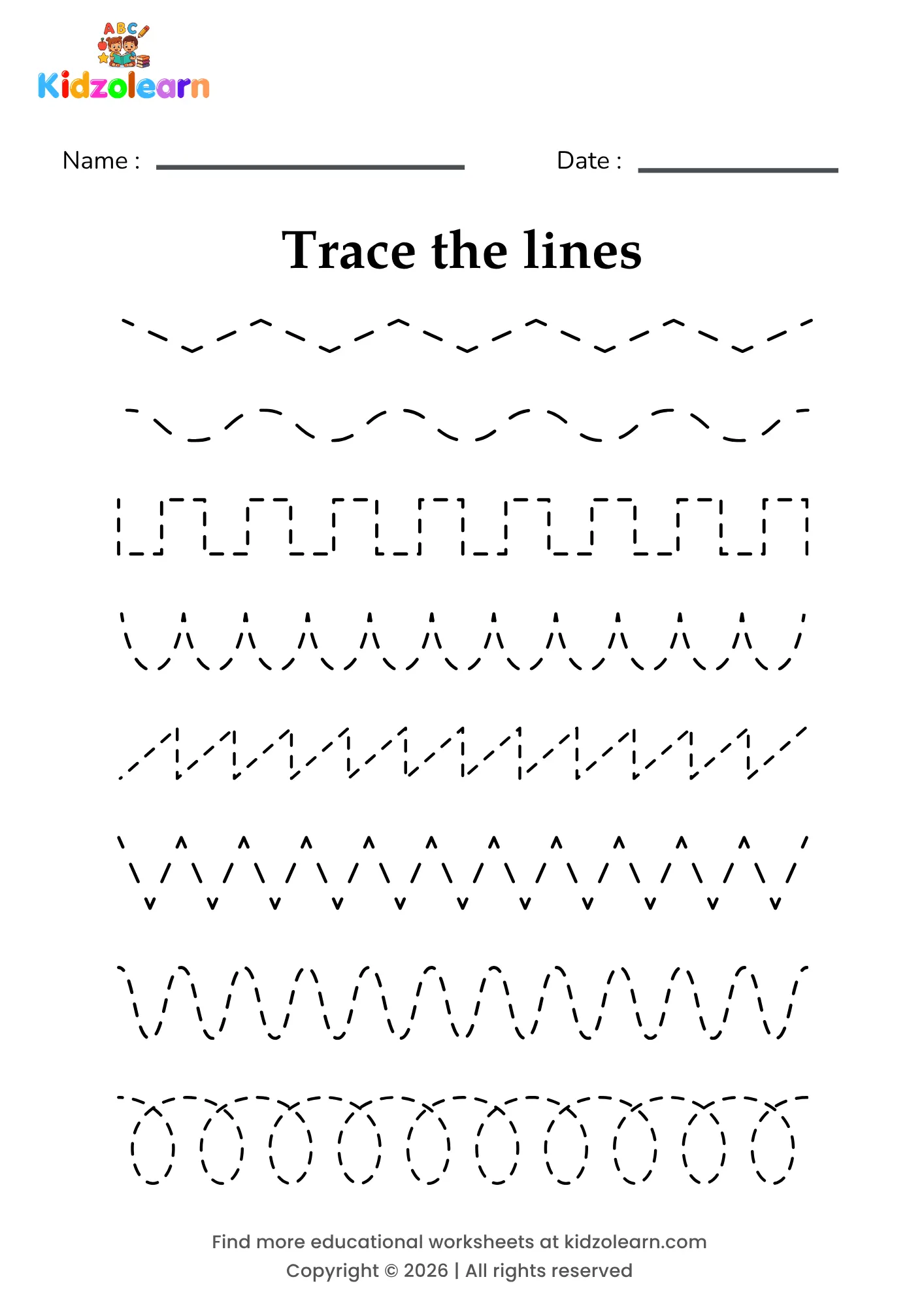
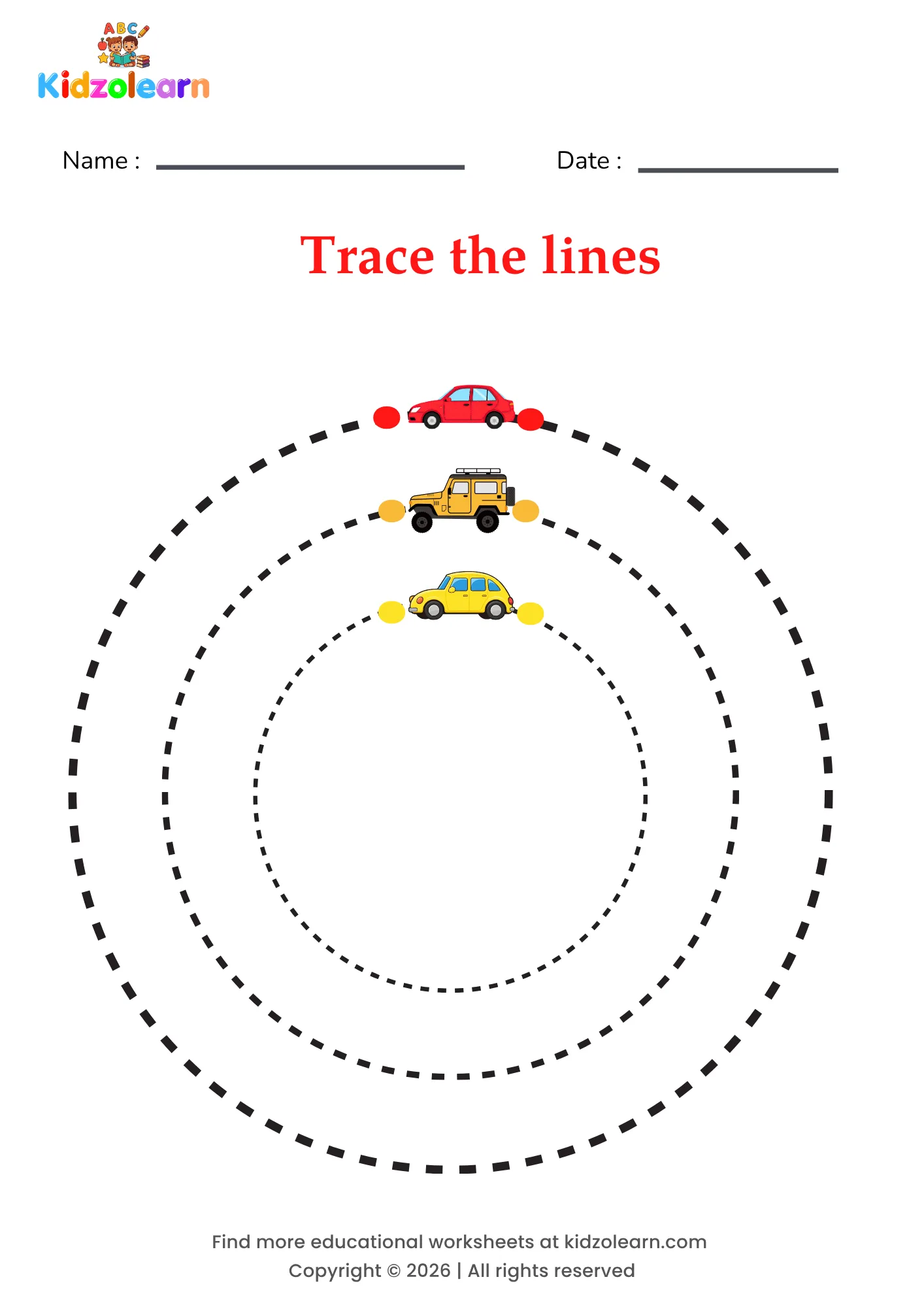
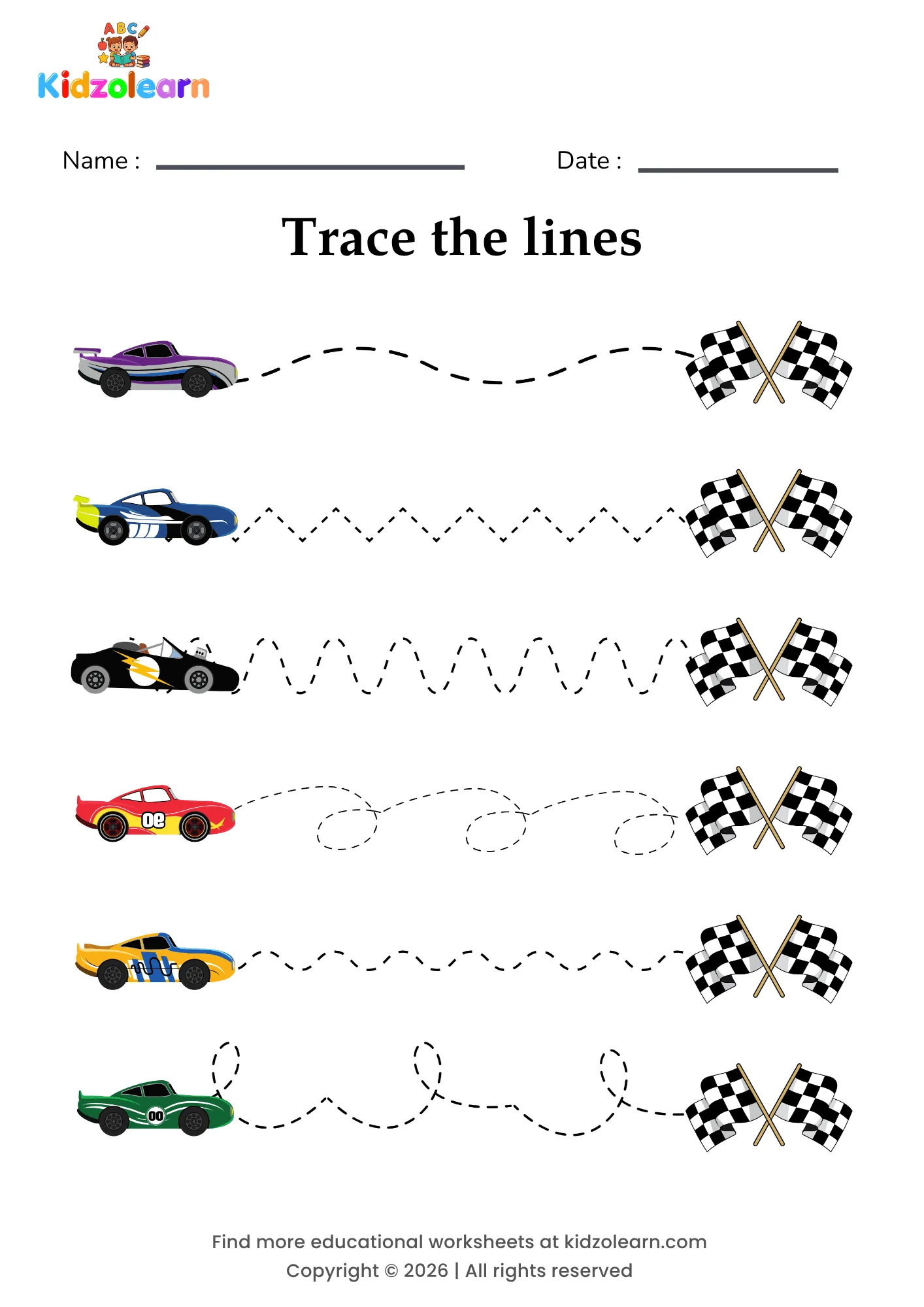
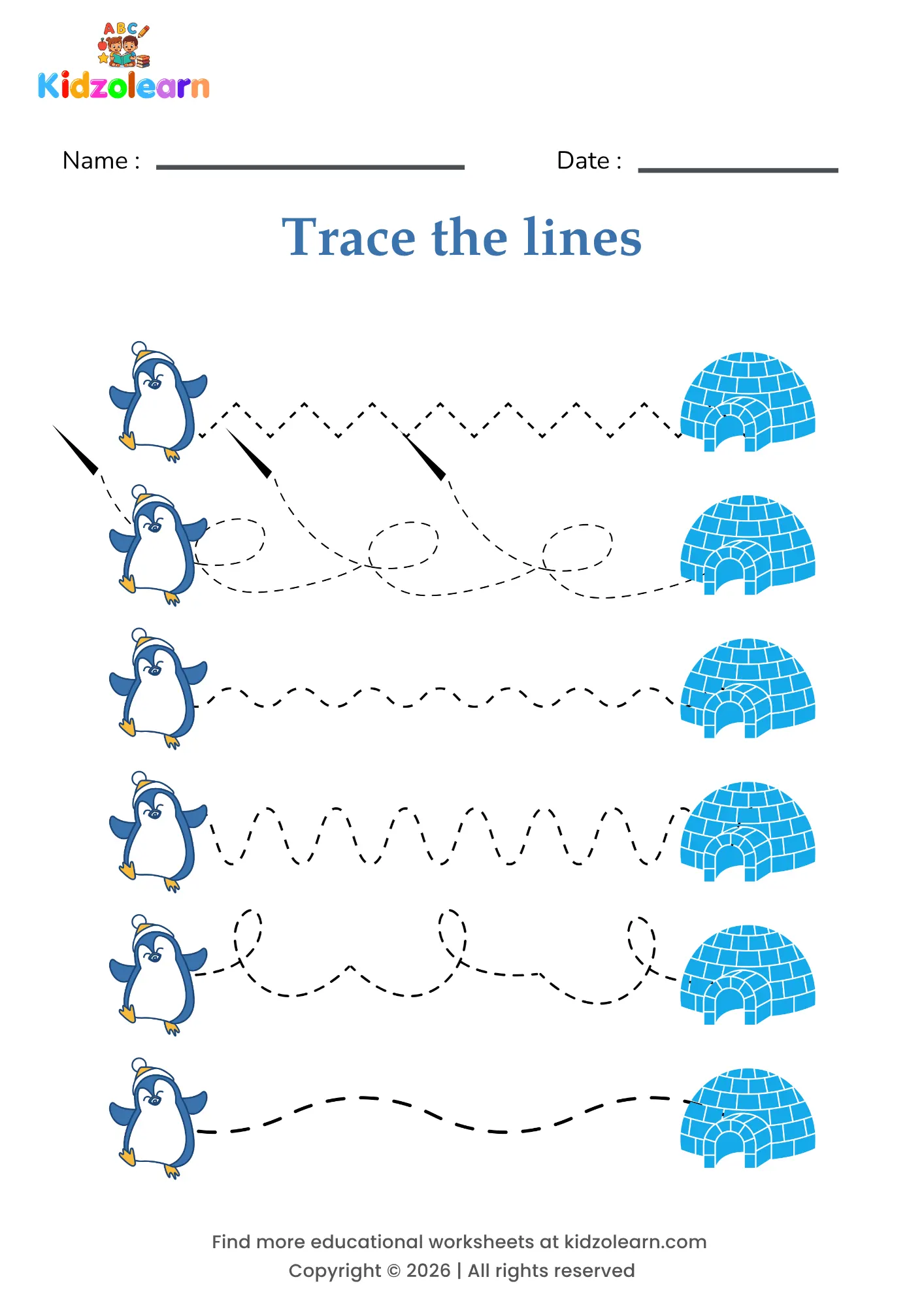
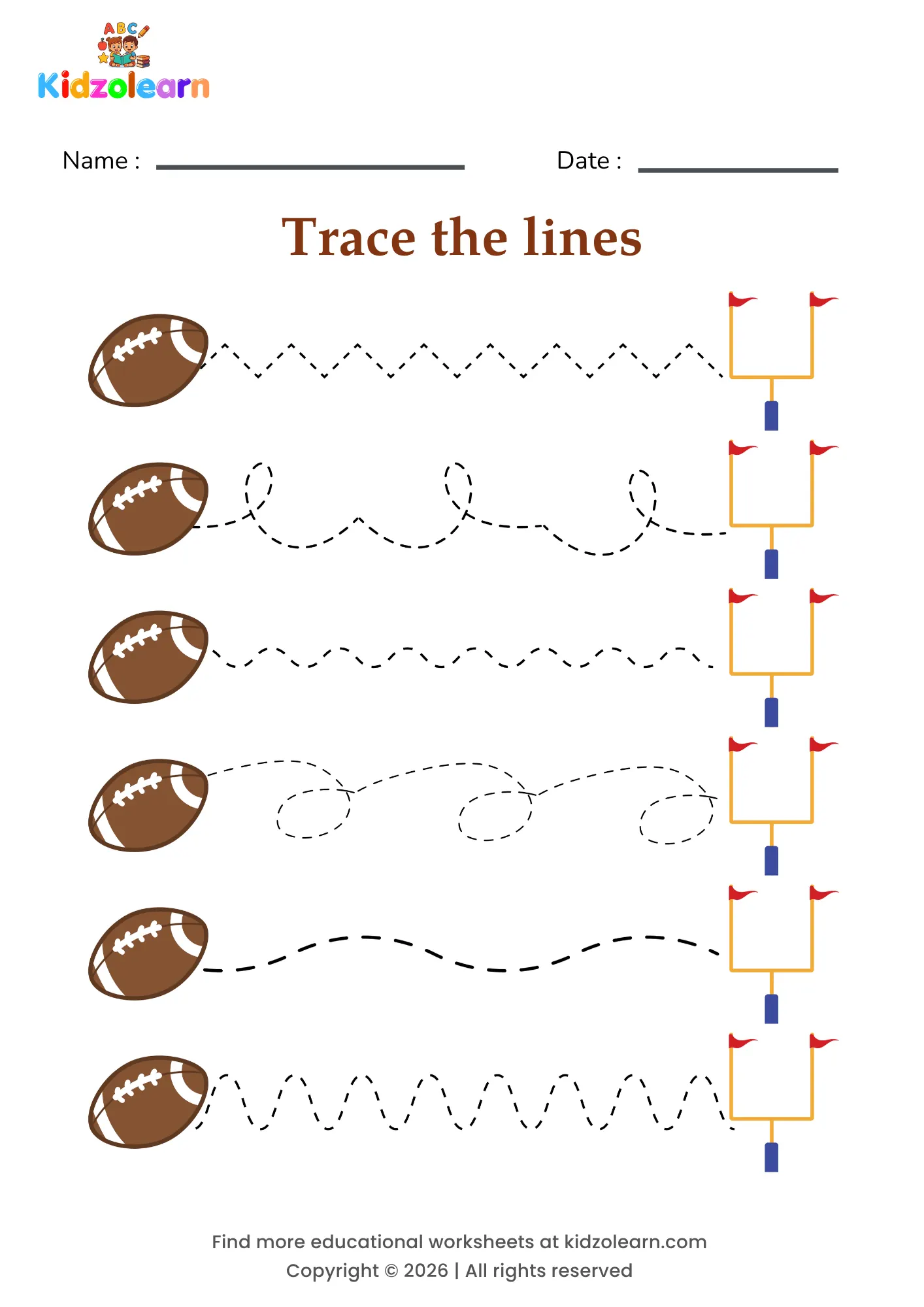
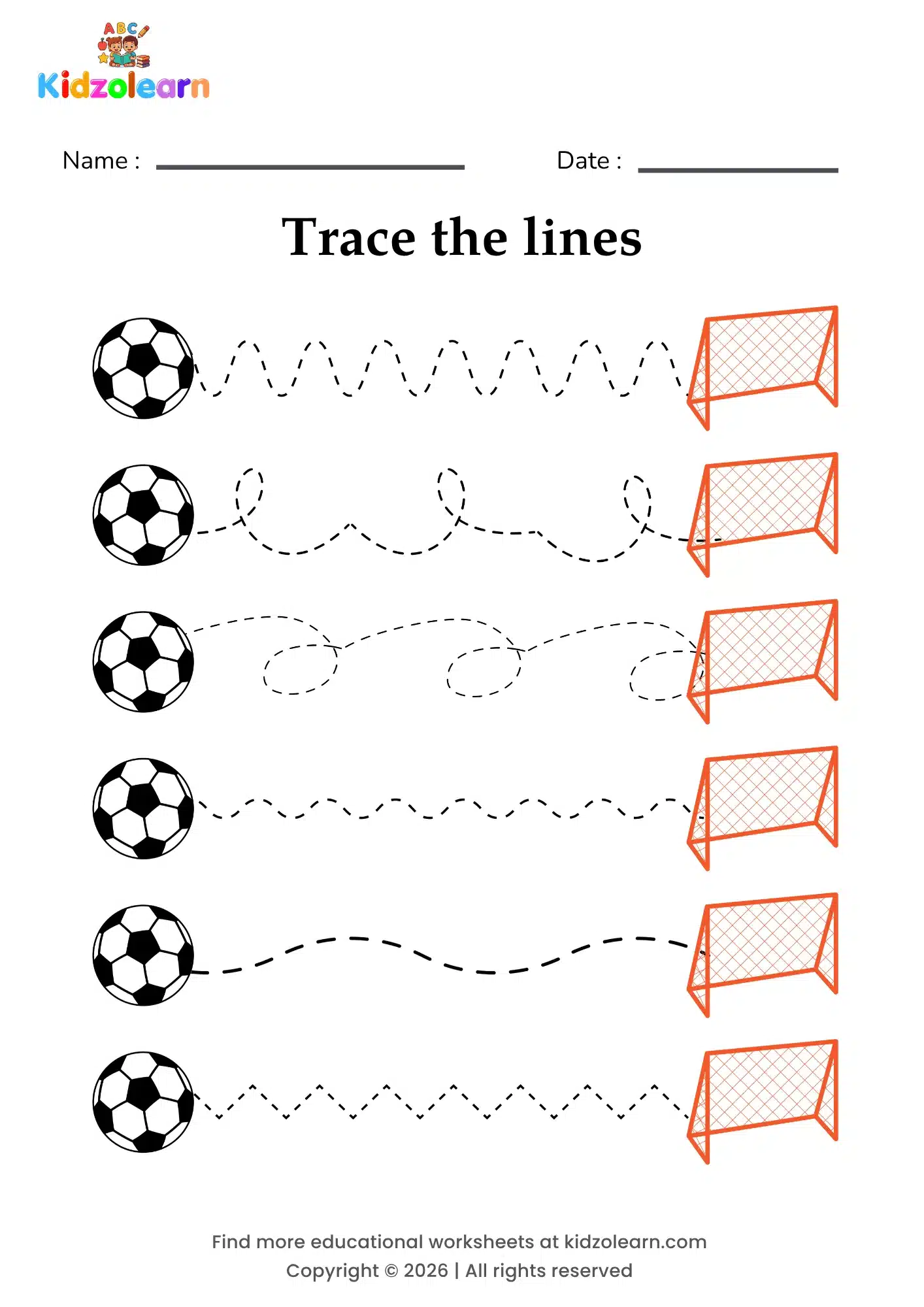
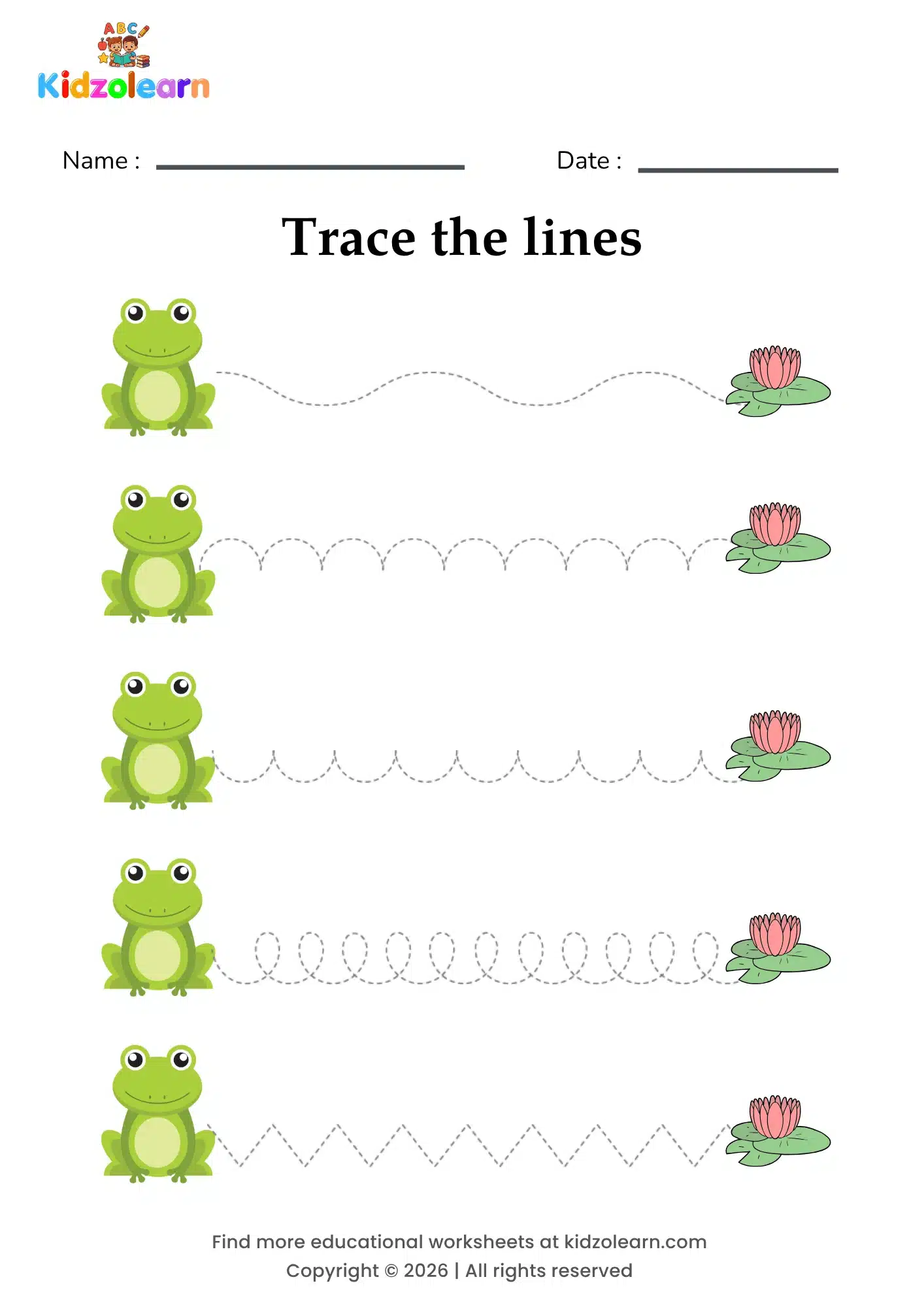
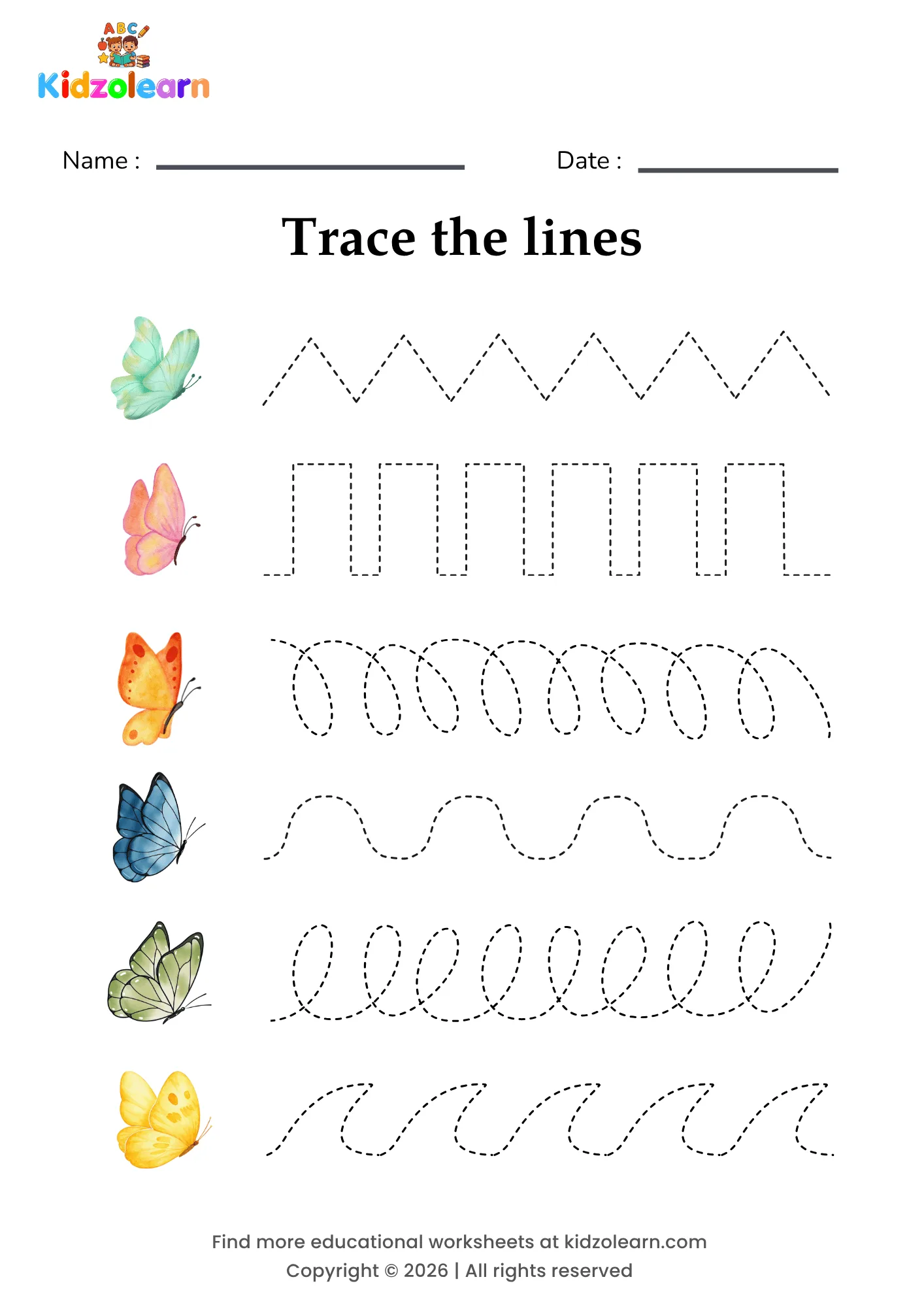
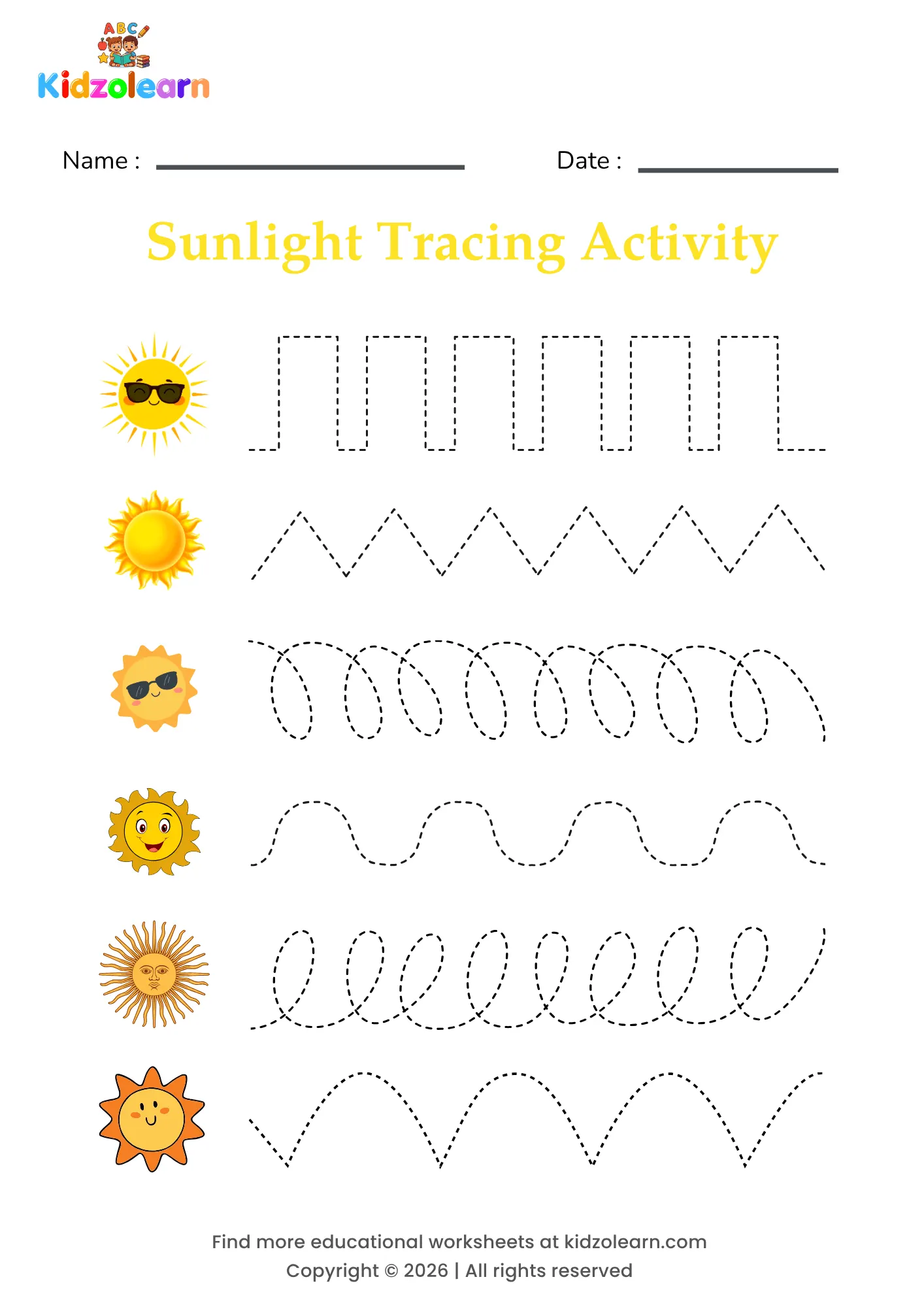
Free tracing lines worksheets for preschool — Download & Print Free
About These Free Tracing Lines Worksheets for Preschool
These free tracing lines worksheets for preschool give your child guided practice with the basic strokes behind handwriting. Each page has big, clear dotted paths with a green starting dot, so small hands know where to begin and which way to go. The lines get harder step by step, from standing and sleeping lines to curves, slanting lines, zigzags and waves.
Every sheet prints on A4 paper and works with crayons, pencils or sketch pens. If you’re not sure where line tracing fits, our guide to pre writing strokes explains the order most children learn these lines in.
Use these free tracing lines worksheets for preschool at home after school, as a calm table activity in class, or as a quick warm-up before writing. Start with the first sheet and move on only when your child can follow the line without lifting the crayon too often. A little practice most days works better than one long session a week.
What your child will learn from this worksheet
- Pencil control: staying on the dotted path and stopping at the end point.
- Hand-eye coordination: the eyes guide the hand along the line.
- Direction: top to bottom and left to right, the same way letters are formed.
- Letter readiness: an L is a standing line plus a sleeping line, and a V is two slanting lines.
- Focus: finishing one short page builds patience and confidence.
- Calm focus: tracing slowly along a path is a quiet activity that helps children settle.
Children who practise with free tracing lines worksheets for preschool usually find shapes worksheets and capital letter tracing much easier later.
Who is this worksheet best for?
- Playgroup and Nursery (about 3 to 4 years): standing lines, sleeping lines and gentle curves.
- LKG (about 4 to 5 years): slanting lines, zigzags and waves.
- UKG and Grade 1: a quick warm-up before small letter tracing.
- Teachers and homeschooling parents: ready-to-print practice for 10 calm minutes.
Every child develops at their own pace, so use these worksheet as a guide, not a test.
If your child already traces straight lines easily, skip ahead to the zigzags and waves. If even standing lines feel hard, trace them in sand, rava or on a chalk slate with a finger first.
How to download and print this free worksheet
- Scroll up to the worksheet grid and choose a worksheet.
- Click the download button. The PDF opens instantly, with no login and no payment.
- Print on A4 paper at actual size (100%) so the dotted lines stay clear.
- Give your child a chunky crayon or a thick pencil and start with the first one.
Tip: put the sheet in a clear plastic sleeve and trace with a whiteboard marker to reuse it. To save ink, print these worksheet in black and white; the dotted guides stay clear and easy to see. More printing help is on our FAQ page.
Frequently Asked Questions
Do I need to pay or sign up for these free tracing lines worksheets for preschool?
No. Every worksheet on Kidzolearn is 100% free, with no login, sign-up or payment. Open a worksheet, download the PDF and print it at home or school. You’ll find more free printables on our home page.
At what age should children start tracing lines?
Many children start tracing standing and sleeping lines at around 3 years, after a stage of happy scribbling. Slanting lines and zigzags usually come a little later, at about 4 to 5 years. Treat these as rough ranges and follow your child’s comfort.
Which lines should my child trace first?
Start with standing lines, then sleeping lines, then curves. Next try slanting lines, zigzags and finally waves. Our free tracing lines worksheets for preschool follow the same easy-to-hard order.
Should my child use a crayon or a pencil?
Start with chunky crayons or thick triangular pencils, which are easier for small hands to hold. Move to a regular pencil once your child traces comfortably and holds it with the fingertips instead of a fist.
Can I print the same worksheet again?
Yes, as many times as you like. Tracing the same line two or three times on different days helps your child get smoother and more confident before moving on.
What comes after free tracing lines worksheets for preschool?
Once lines feel easy, move to circle tracing and shapes worksheets. After that, try capital letter tracing, small letter tracing and number worksheets.
Finished the Tracing Lines? Try the Next Step
Print another of our free tracing lines worksheets for preschool, or move on when lines feel easy.
Practise next, in this order
Parent guides: Pre writing strokes · How to teach shapes · FAQ