More and Fewer Worksheet for Kids – Free Printable PDF
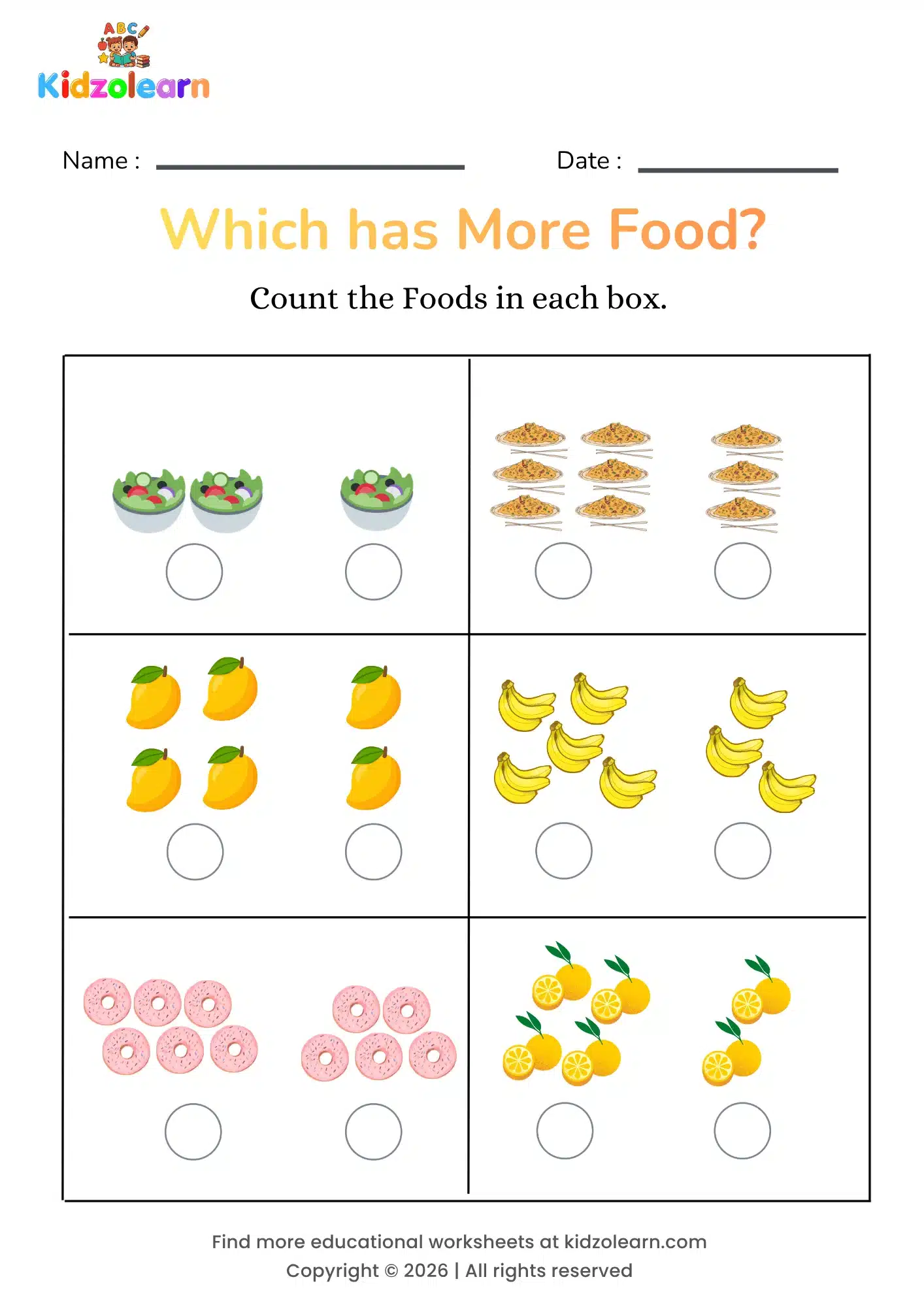
This free more and fewer worksheet for kids helps children build counting and quantity comparison skills through salad bowls, noodle plates, mangoes, bananas, donuts and oranges. Children count the food items in each box and mark the group with more — a fun, low-pressure way for preschoolers and Kindergarten children to practise observation, vocabulary and fine motor control. Print it instantly — no login, no payment, no sign-up required.
- 📚 GRADE LEVEL → Nursery – LKG – 1st – 2nd
- 👶 AGE GROUP → 3–7 Years
- 📐 PAGE SIZE → A4 Size
- 🎯 DIFFICULTY → Beginner
Related Worksheets
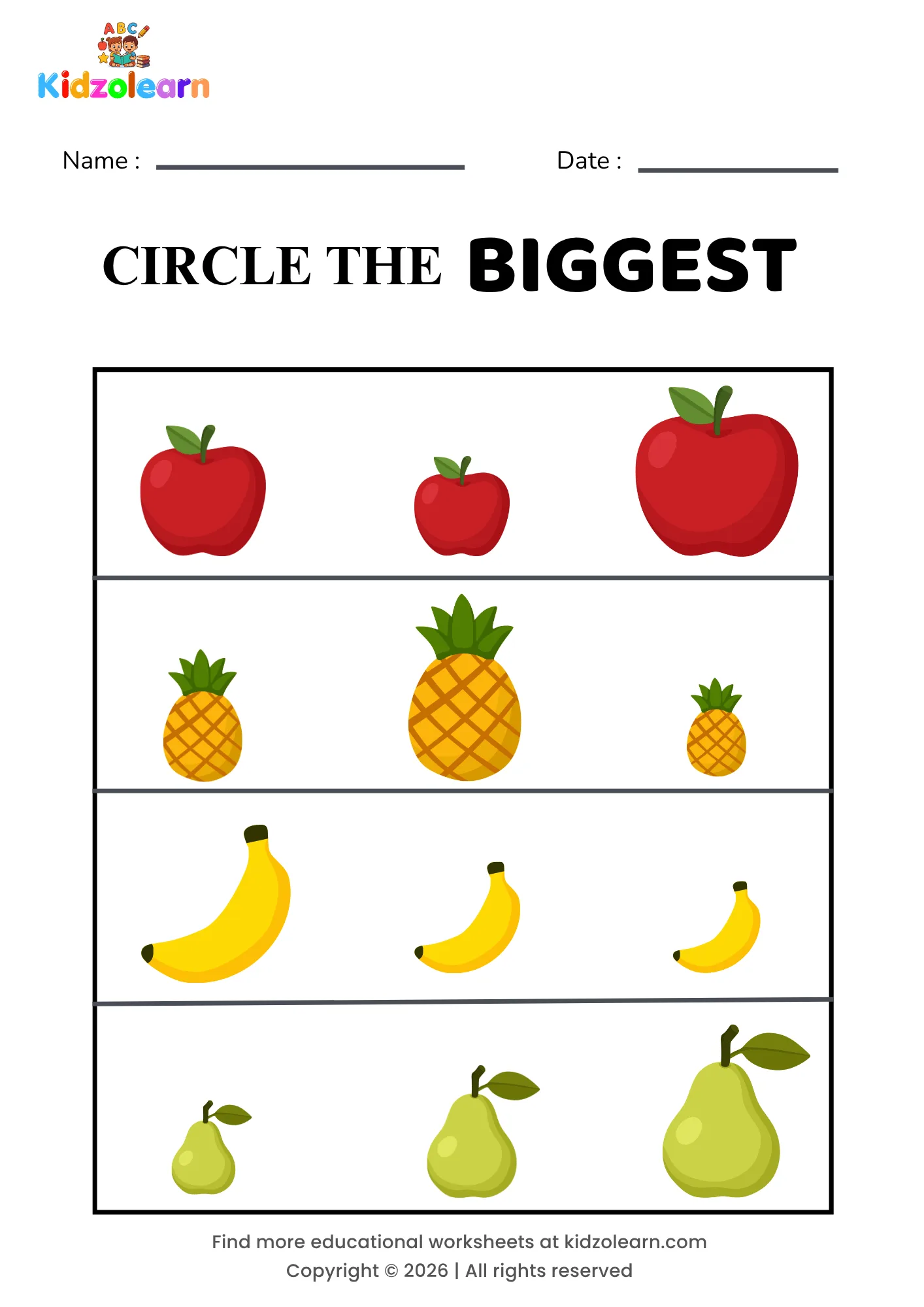
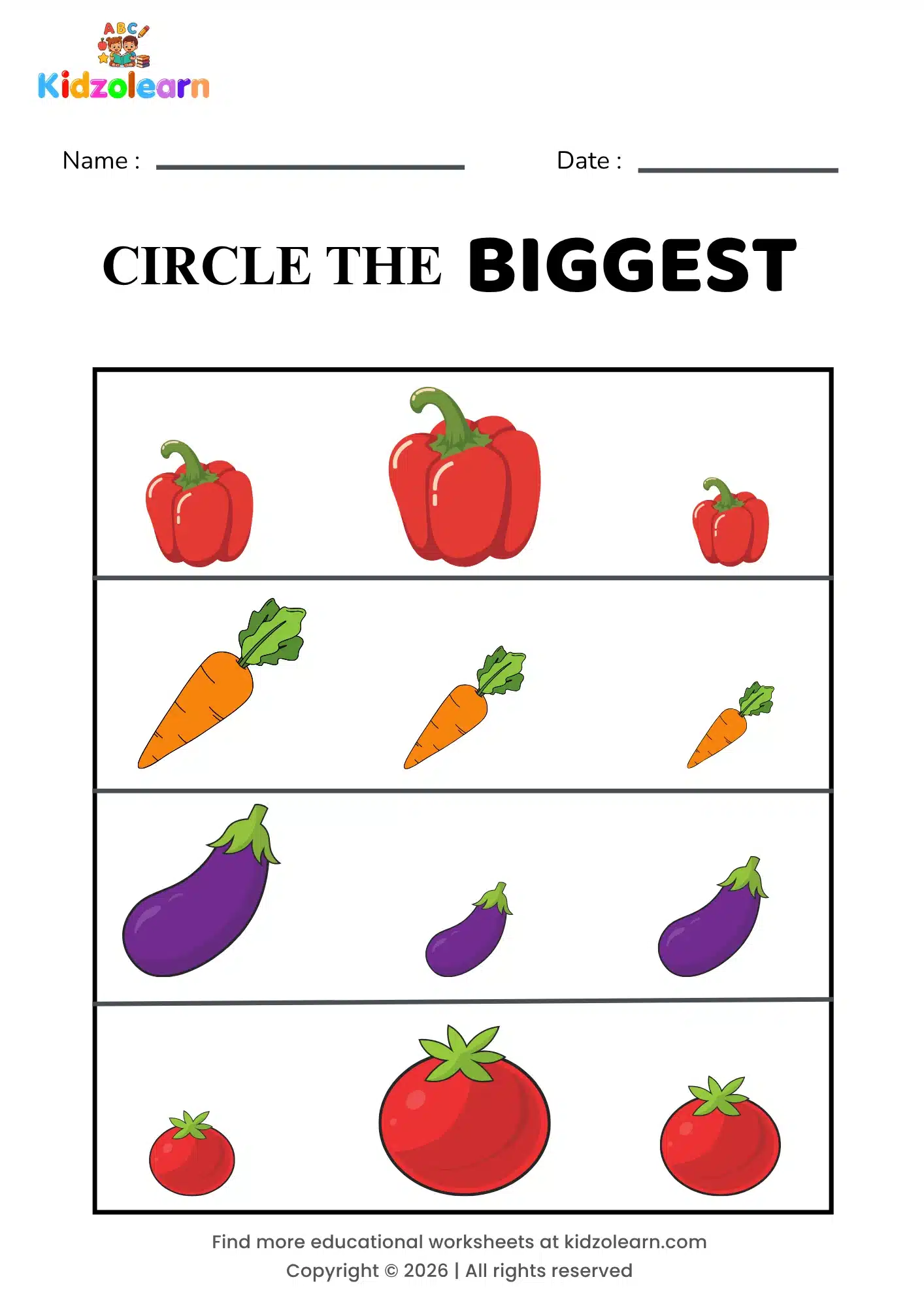
More about this worksheet
About This Free More and Fewer Worksheet for Kids for Kids
This free more and fewer worksheet for kids gives one comparison activity a full page to itself. A name and date line runs across the top and the activity fills the rest of the sheet. At Kidzolearn, every worksheet is 100% free to download and print — no login, no subscription, no payment required.
Six bordered boxes in two columns, each with two groups of the same food and a circle beneath each group to mark. The pictures used are salad bowls, noodle plates, mangoes, bananas, donuts and oranges.
The foods on this sheet are arranged in loose clusters rather than neat rows, which makes counting them slightly harder than a tidy line of items. Scattered items are exactly where children lose count. Encourage a habit of working left to right through the group rather than jumping around it. Counting two groups and comparing them is the step just before writing numbers, and our lowercase letter tracing worksheets follow on from here. The rest of the library sits on our free printable worksheets for kids.
What your child will learn from this worksheet
A single sheet, and more going on in it than it first appears:
- Making a counting and quantity comparison judgement and committing to an answer
- Using the words that go with it — more, less, fewer and the same
- Counting small groups accurately without skipping or repeating an item
- Marking a small circle neatly, which takes more control than it looks
- Working through a full page independently and finishing what they started
These are the same early reasoning and fine motor foundations expected in Nursery, LKG, UKG, Reception and Grade 1. Our free printable coloring pages build on the same kind of thinking with numbers rather than pictures.
Who is this worksheet best for?
This free worksheet for kids is perfect for:
- Nursery, LKG and Grade 1 children aged 3 to 7 years learning comparison concepts for the first time
- Preschool and Kindergarten classroom math and observation activities
- UK Reception and Year 1 EYFS measurement and comparison sessions
- Homeschooling parents building a structured, curriculum-aligned practice routine
Browse the complete collection of Free Comparison Worksheets for Kids on Kidzolearn for more free comparison printables.
How to download and print this free worksheet
Click the “Download Free Worksheet” button on this page — the PDF downloads instantly with no sign-up or email required. Print on standard A4 paper for the best experience and explore more free comparison worksheets for kids in our full collection.
Frequently Asked Questions
Are Kidzolearn worksheets really free?
Yes! Every worksheet on Kidzolearn is 100% free — no subscription, no login and no payment required at any time. Simply click the download button, save the PDF and print it instantly at home or in the classroom.
At what age should children start using this more and fewer worksheet for kids?
From about three years old, but go by what your child can already do. If they can look at two things and say which is bigger, or longer, or there is more of, they are ready for this more and fewer worksheet for kids. If not, do the same activity with toys or fruit first — the printed version is easier once the idea is already familiar.
How does this worksheet help children build size comparison skills?
More and fewer worksheet for kids shows two groups of food items side by side in six boxes. Counting each group and marking the one with more builds one-to-one counting accuracy, number sense and confident quantity comparison — foundational early counting skills.
Is comparison practice part of the official early years curriculum?
Yes — comparing and ordering objects by size, weight, height and quantity appears in early years curricula across India, the UK, the US and Australia, usually grouped under early mathematics. The skill being built is the language of comparison, which formal number work assumes a child already has. Our sight words worksheets are the natural next step once this one feels easy.
Can I use these worksheet at home?
Absolutely! This worksheet is completely free to download and print at home. All you need is a printer and crayons or a pencil — no cost, no sign-up and no login required. You can print it as many times as your child needs.