Free Lowercase Letter Tracing Worksheets for Kids
Download free lowercase letter tracing worksheets for kids to trace and write small letters a to z with numbered strokes and writing lines. Made for ages 3 to 7 and ready on A4 in seconds.
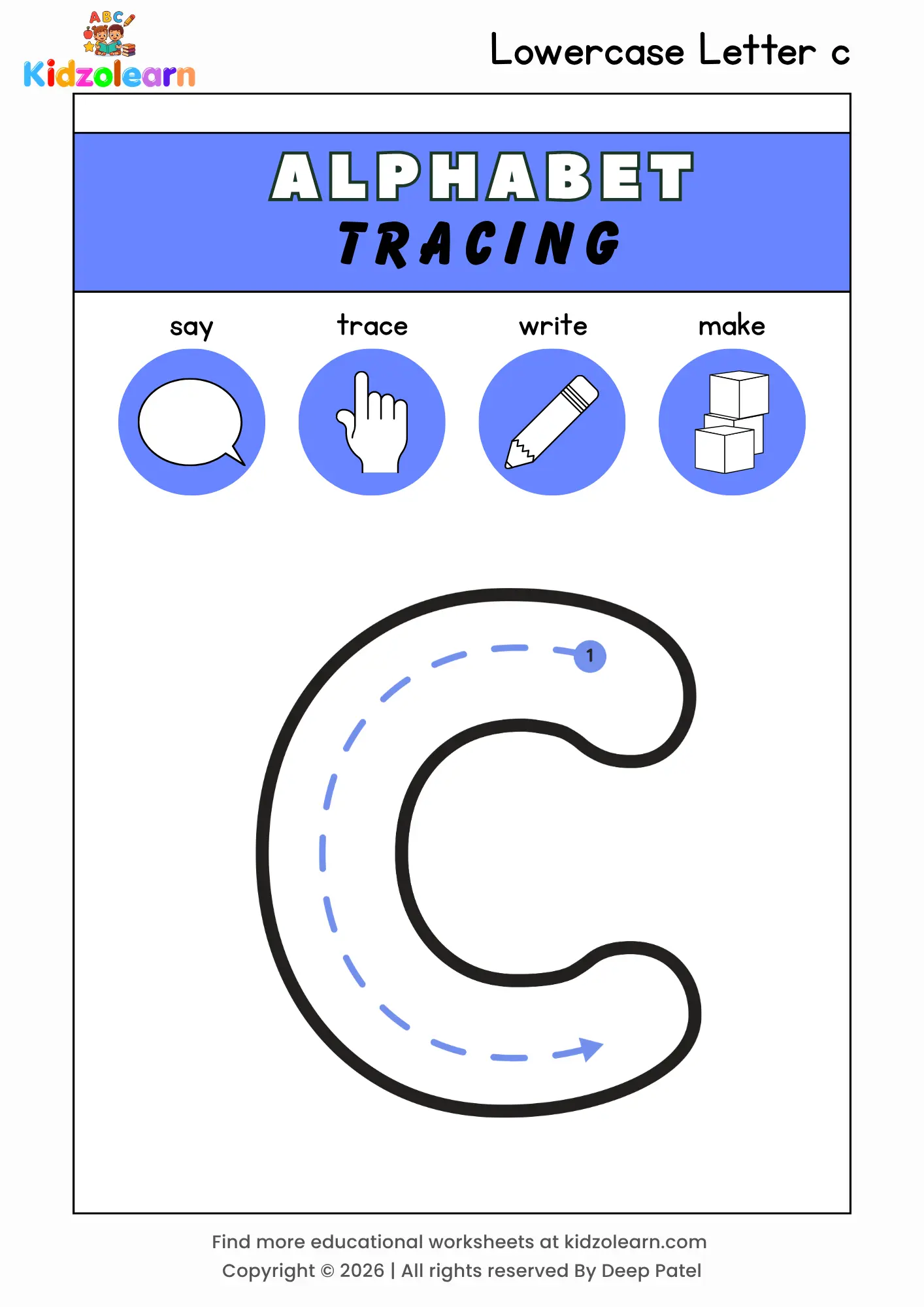

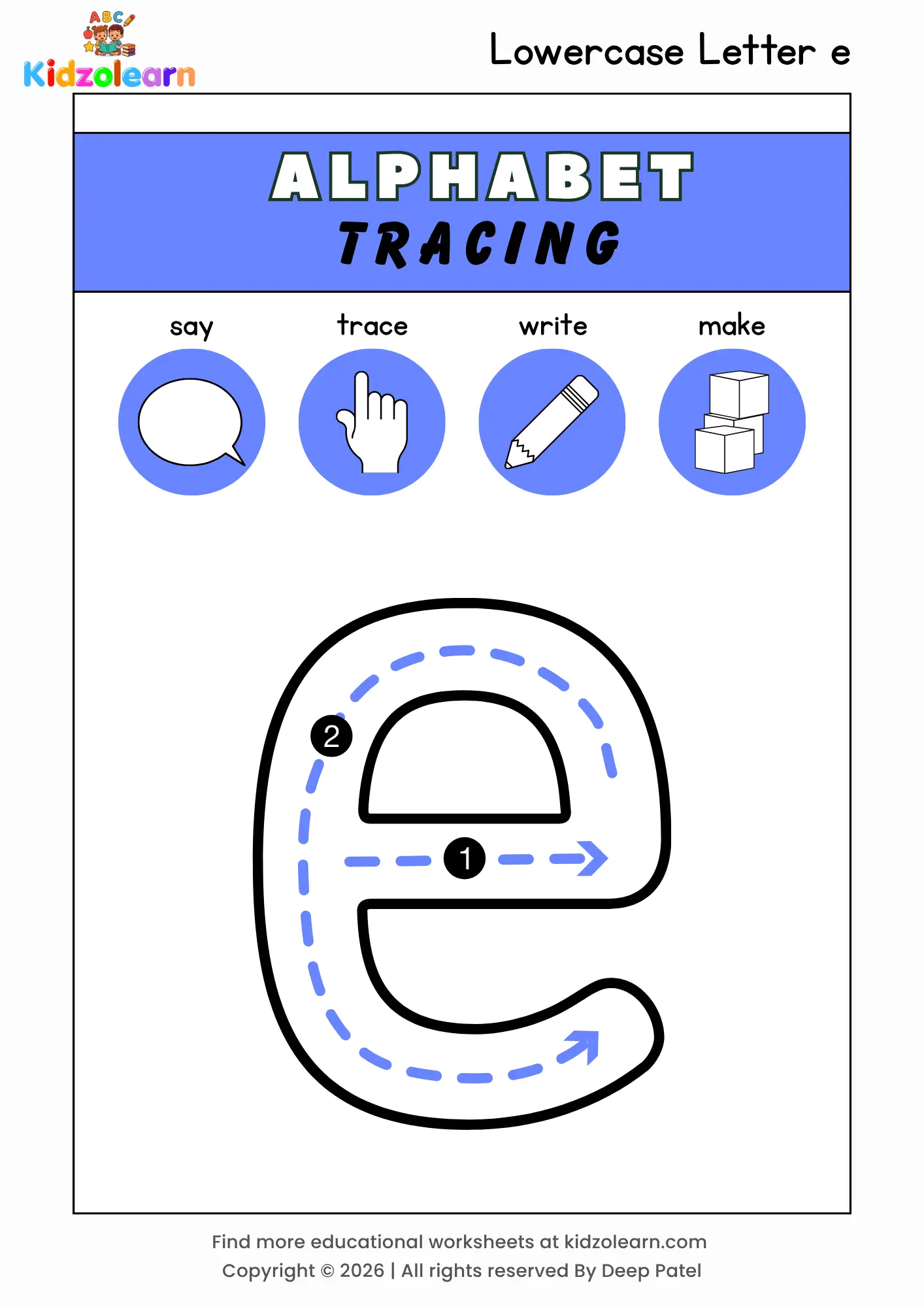
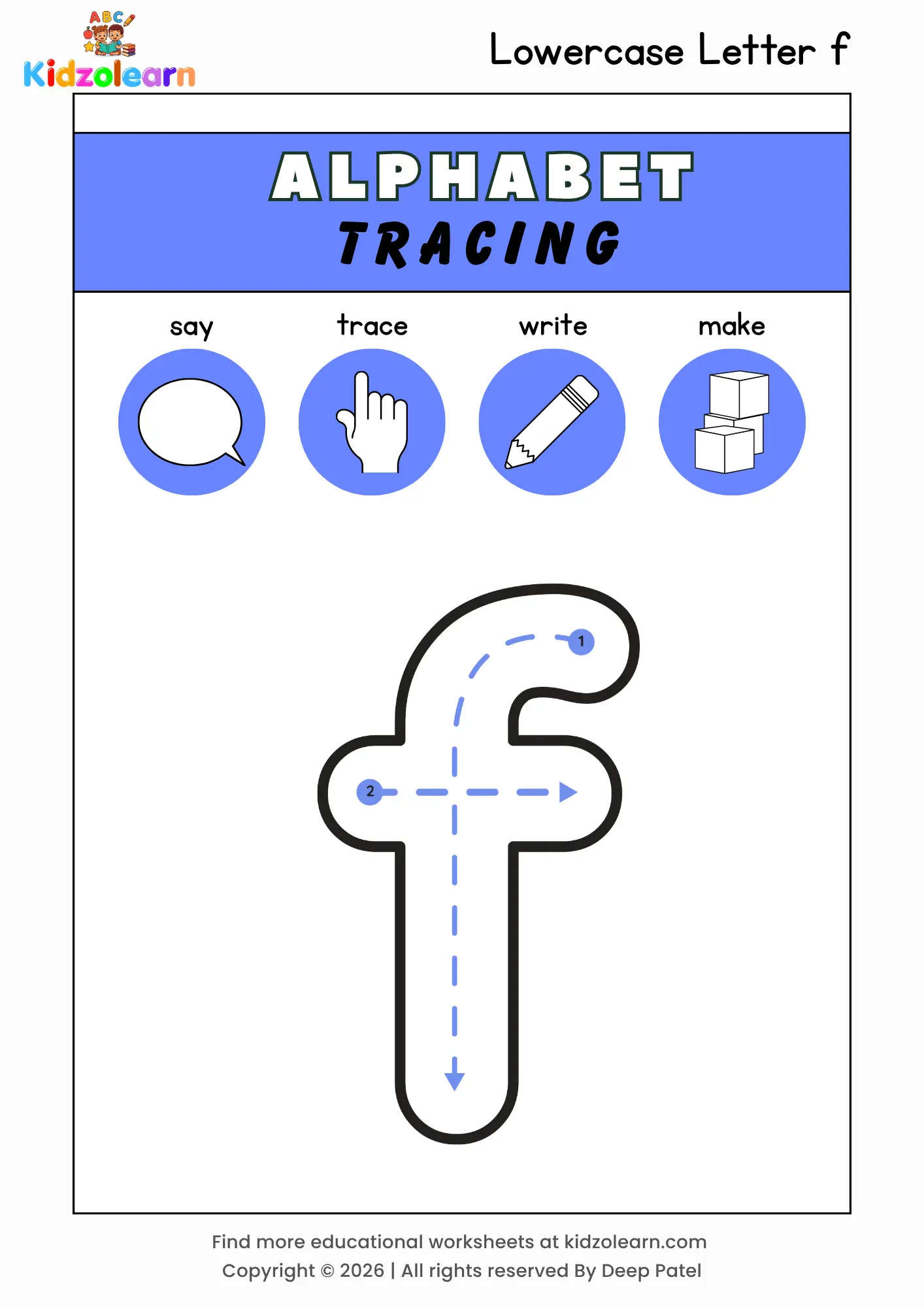
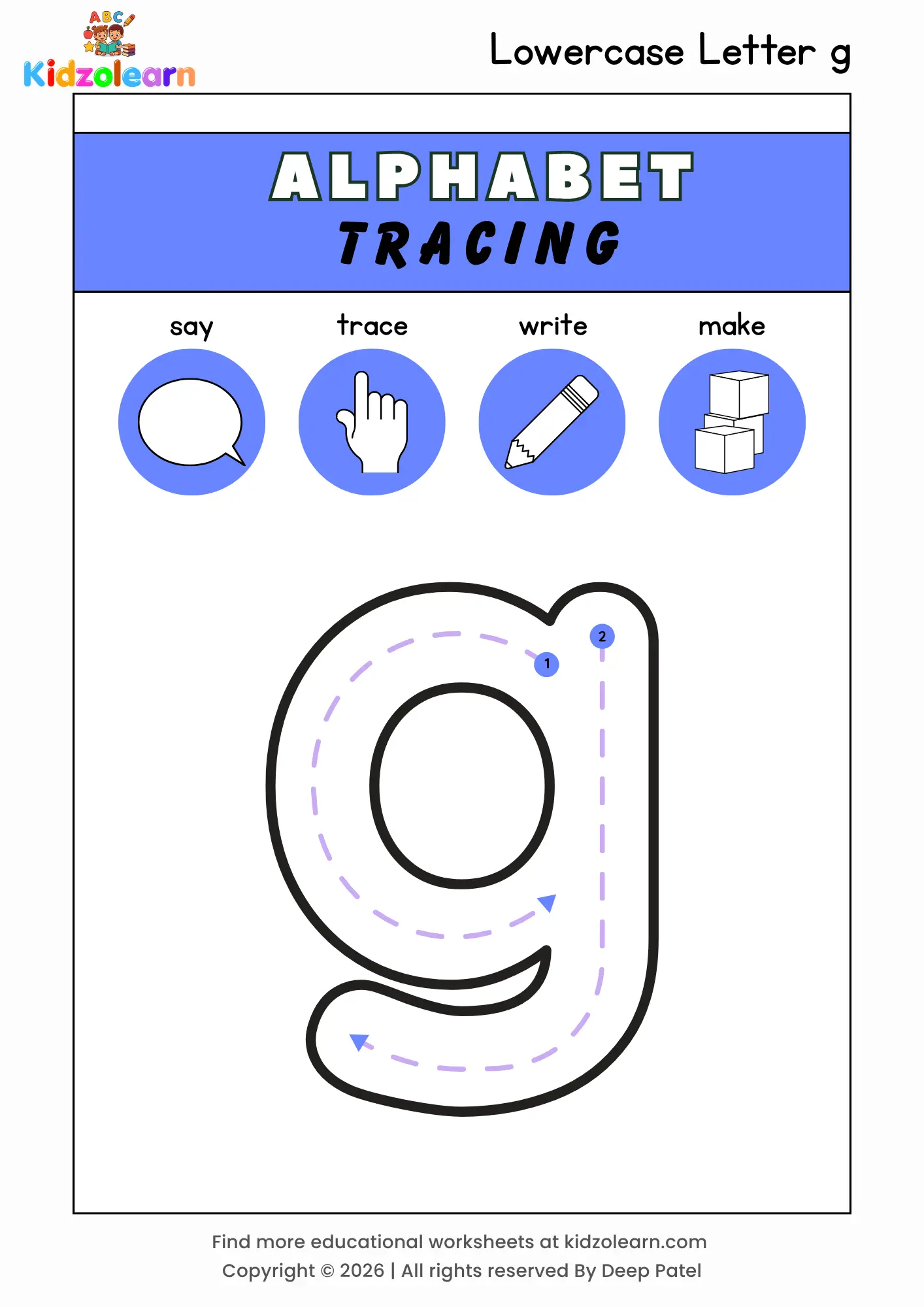
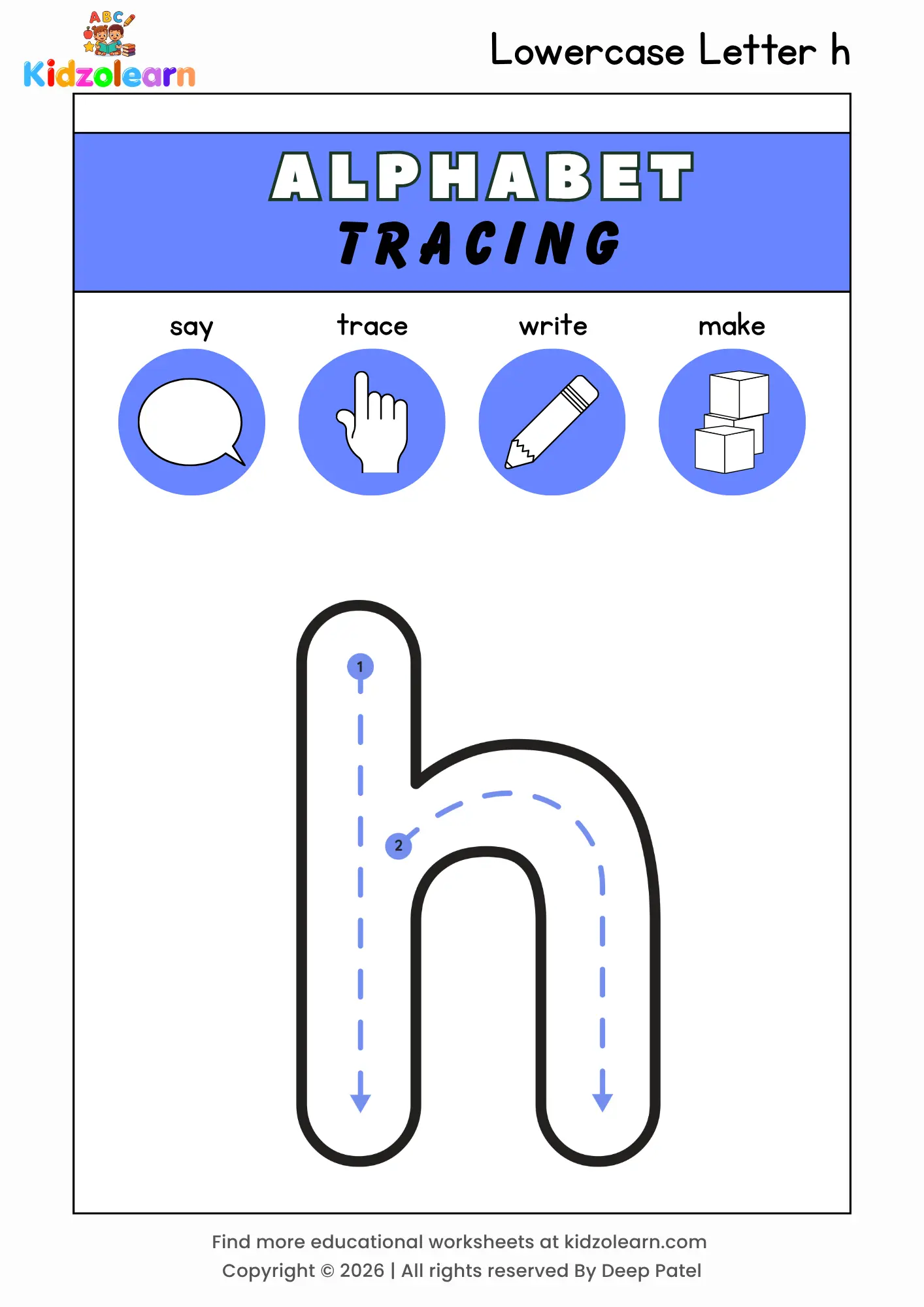
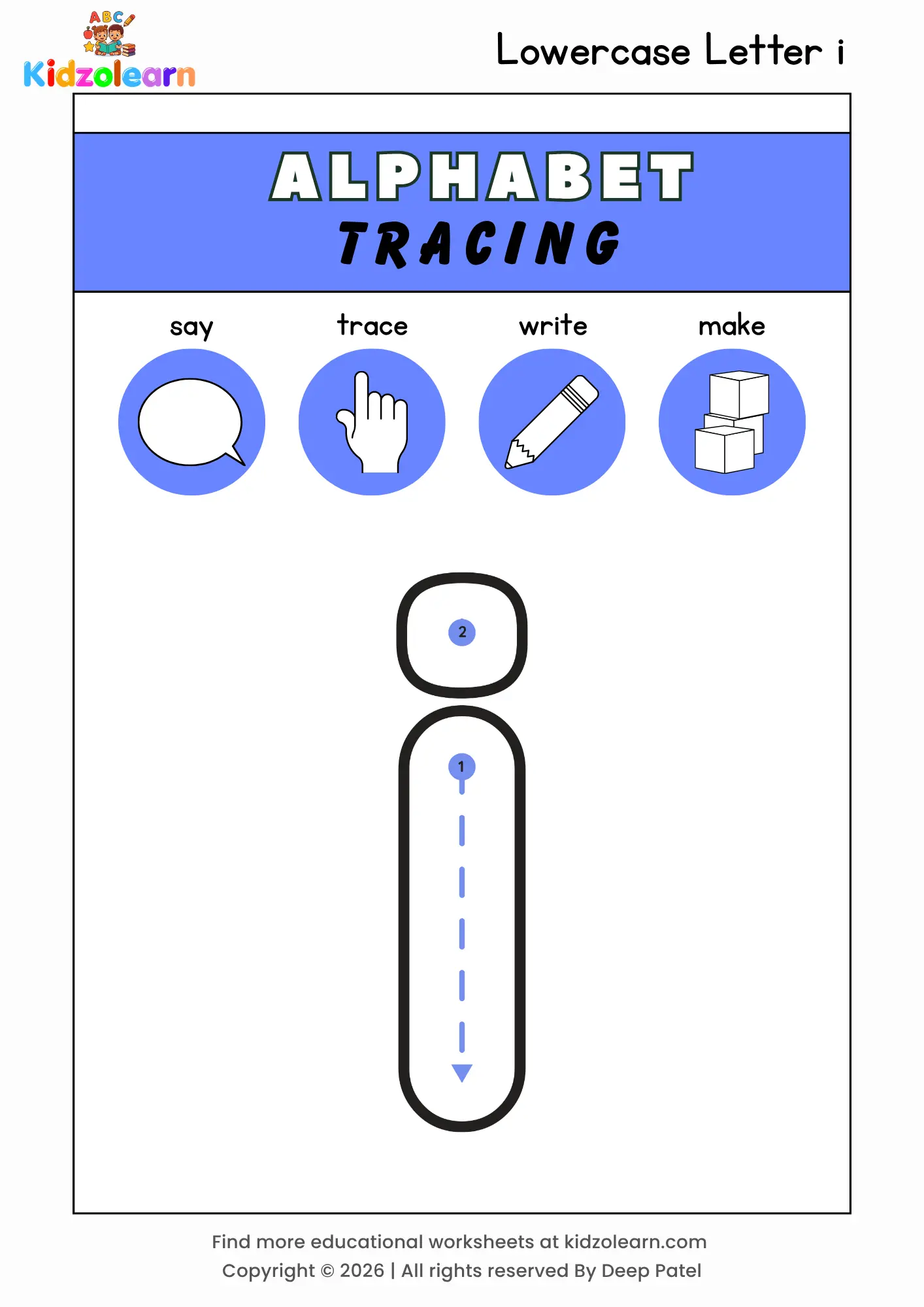
Free lowercase letter tracing worksheets for kids — Download & Print Free
About These Free Lowercase Letter Tracing Worksheets for Kids
These free lowercase letter tracing worksheets for kids help children aged 3 to 7 learn to recognise, trace and write all 26 small letters, from a for apple to z for zebra. There is one big letter on each sheet, printed on writing lines so your child sees which letters stay small, which reach up tall and which dip below the line. Every printable is 100% free, with no sign-up and no payment.
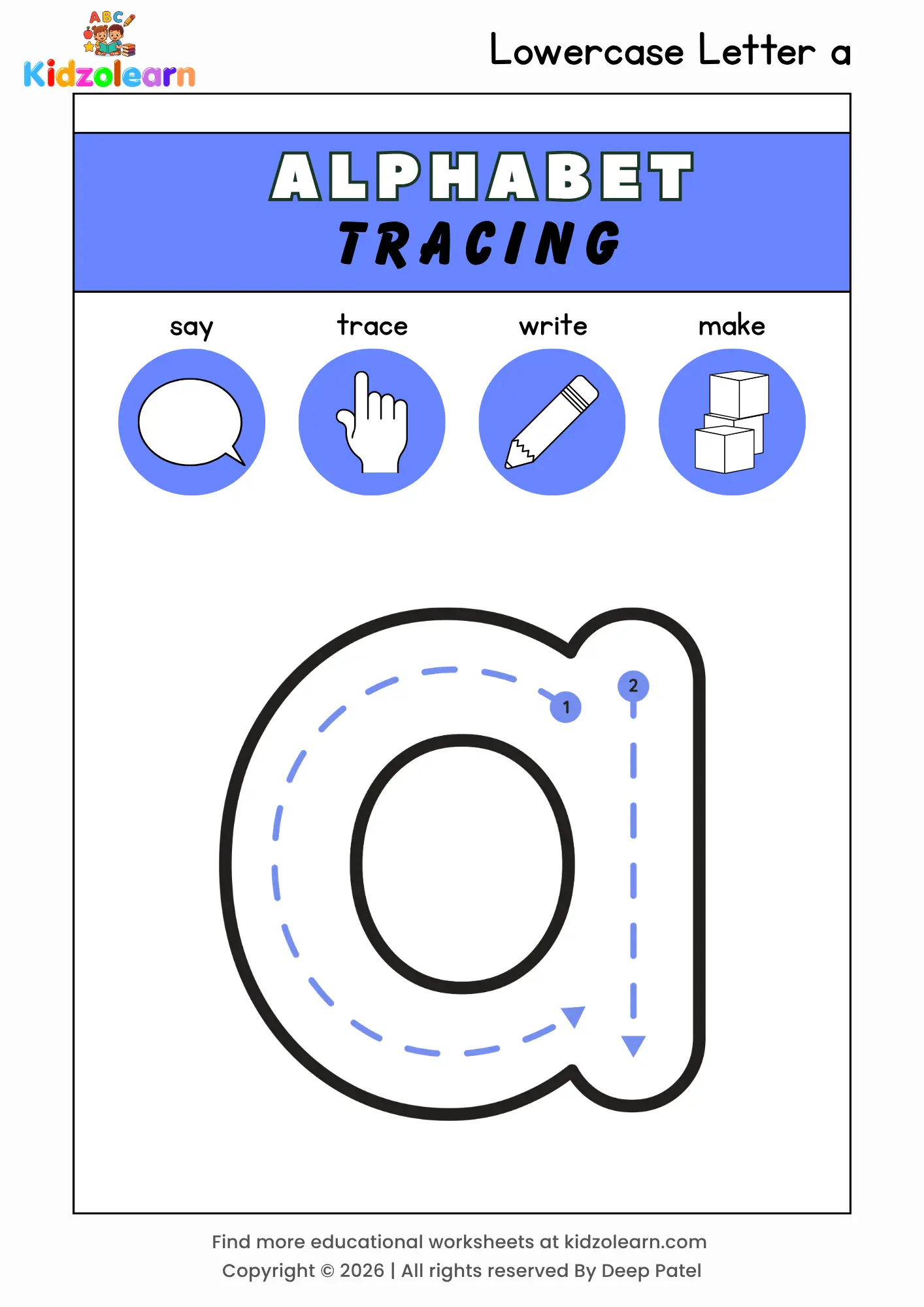
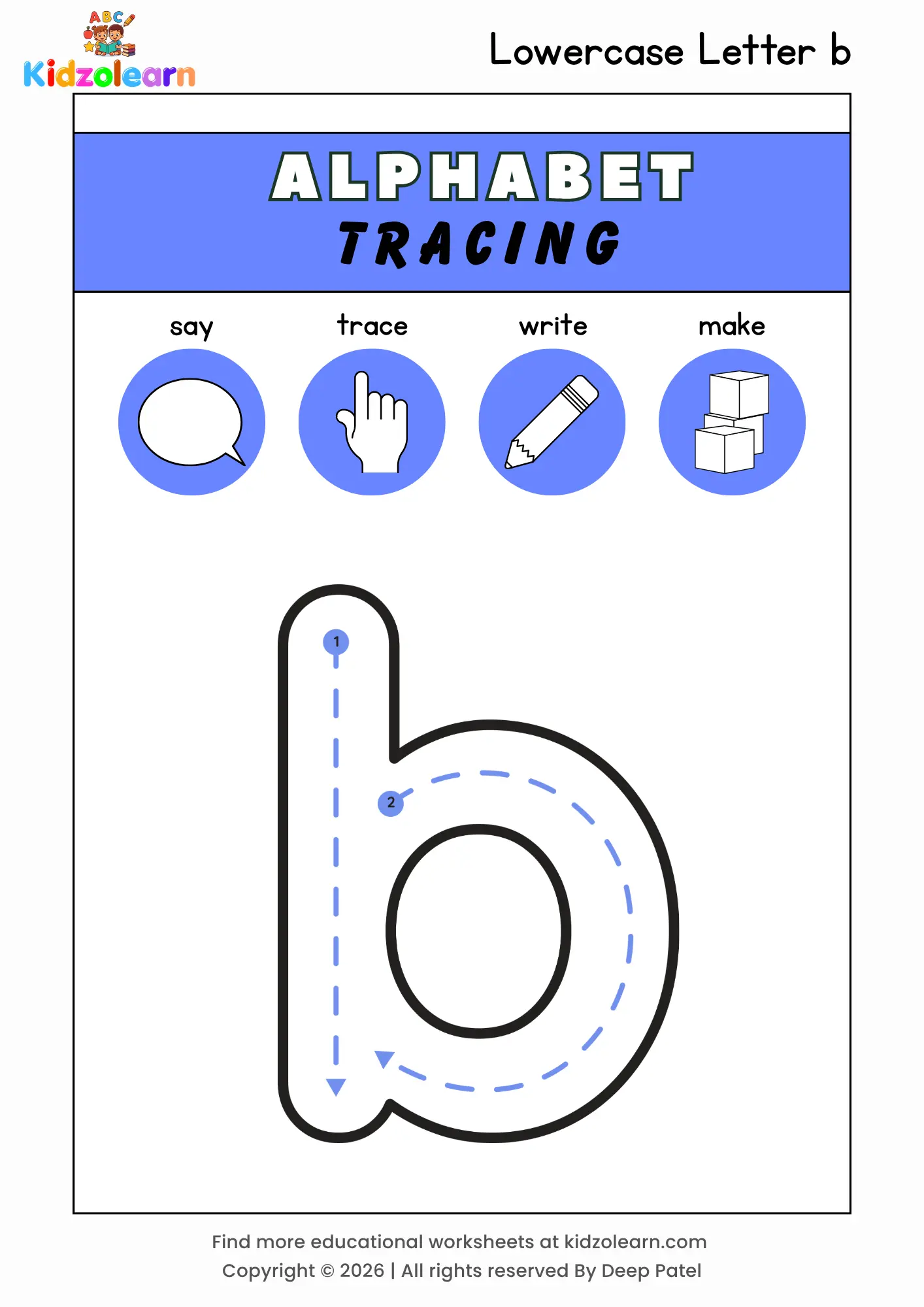
Each sheet follows the same four simple steps:
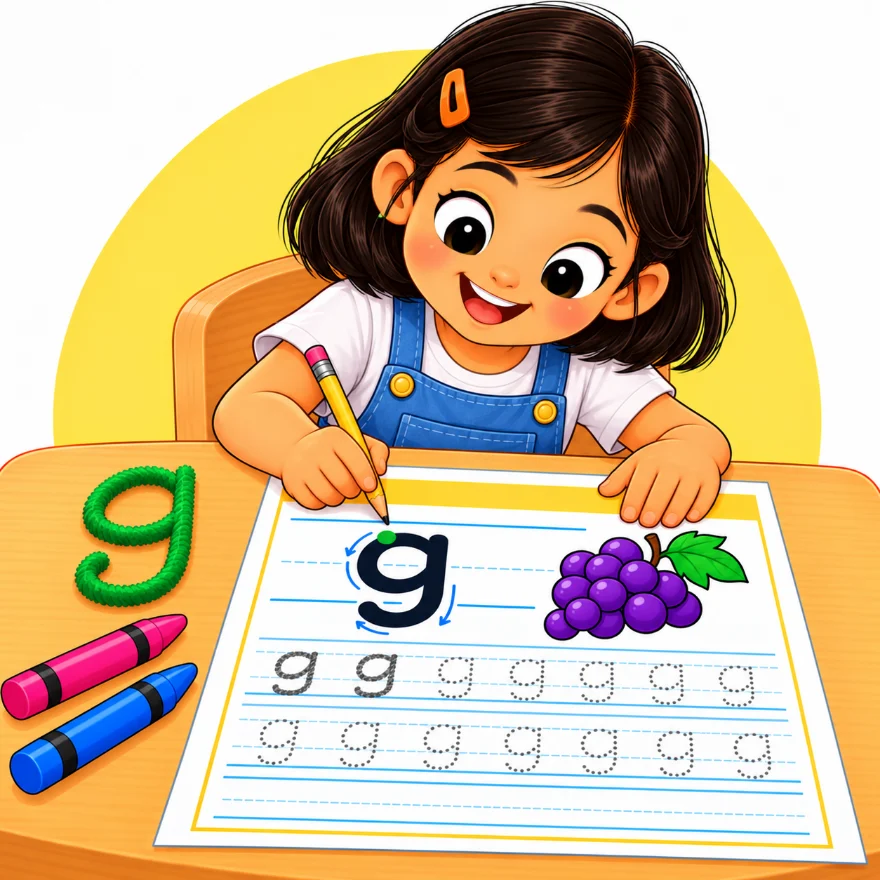
- Say: say the letter name and its sound, then the picture word, like “g, grapes”.
- Trace: follow the numbered dotted strokes, which show where to start and which stroke comes next.
- Write: write the small letter alone on the empty line, without dots.
- Make: finish with a small hands-on activity that builds the letter again in a new way.
A helpful order is to start with letters that begin like c (c, a, d, g, o, q), then straight letters (l, i, t), then hump letters (r, n, m, h, b, p), and finish with the rest.
If your child is still learning capitals, start with our uppercase letter tracing worksheets, or see both cases together on our alphabet tracing worksheets page. If holding a pencil still feels new, warm up with our tracing lines worksheets first.
What your child will learn from this worksheet
These lowercase letter tracing worksheets for kids help your child:
- Recognise all 26 small letters: by shape, by name and by sound.
- Form each letter correctly: following numbered strokes from the right starting point.
- Use writing lines: keeping small letters small, tall letters tall and tails below the line.
- Tell tricky letters apart: such as b and d, or p and q, which are easy to mix up.
- Write on their own: moving from dotted tracing to writing each small letter without help.
Most of the words children read are in small letters, so these skills lead straight into reading in Nursery, LKG, UKG and Grade 1.
Who is this worksheet best for?
- Nursery (about 3 to 4 years): saying letter sounds and tracing simple small letters like c, o and l.
- LKG (about 4 to 5 years): tracing all 26 small letters and matching them to picture words.
- UKG (about 5 to 6 years): writing small letters alone on writing lines.
- Grade 1 (about 6 to 7 years): neat handwriting revision and fixing letters that are still reversed.
- Teachers and homeschooling parents: these lowercase letter tracing worksheets for kids make a ready a to z set for home or class.
Every child learns at their own pace, so use these lowercase letter tracing worksheets for kids as gentle practice, not a test. Small letters are trickier than capitals, so go slowly.
How to download and print this free worksheet
- Scroll up to the worksheet grid and choose a letter.
- Click the download button. The PDF opens instantly, with no login and no payment.
- Print on A4 paper at actual size (100%) so the letters and writing lines stay clear.
- Give your child a pencil or a thin crayon and start at stroke number 1.
Tip: before tracing, ask whether the letter is small, tall or has a tail, and point to where it sits on the lines. To save ink, print these lowercase letter tracing worksheets for kids in black and white; the dotted strokes stay easy to see. For tips on early pencil skills, read our pre-writing strokes guide, and find more printing help on our FAQ page.
Frequently Asked Questions
Do I need to pay or create an account for these worksheets?
No. Every worksheet on Kidzolearn is 100% free, with no login, account or payment. Open a worksheet, download the PDF and print it at home or school. You’ll find more free printables on our home page.
What age group are these worksheets designed for?
They’re made for children aged 3 to 7, from Nursery to Grade 1. Younger children say and trace simple small letters, while older children write all 26 on writing lines on their own.
What is the Say, Trace, Write and Make method?
It is the four-step routine on every sheet. Your child says the letter and its sound, traces it using the numbered strokes, writes it alone, then makes it again with a hands-on activity. Using sound, sight and movement together helps letters stick.
Why is it important to teach lowercase letters separately from uppercase?
Many small letters look nothing like their capitals, such as a and A, or g and G, so children need to learn each shape on its own. Small letters also sit on the line in three sizes: small, tall and with a tail.
How can I help my child stop mixing up b and d?
Teach them as different movements. b starts with a tall line, then the bump. d starts like c, then goes up tall. Tracing c first and then turning it into d helps. A few mix-ups are normal until about age 6 or 7.
What comes after lowercase letter tracing worksheets for kids?
Once small letters feel easy, start reading simple words with our sight words worksheets, then try short stories with our reading comprehension worksheets.
Traced a to z? Try the Next Step
Print another of our free lowercase letter tracing worksheets for kids, or start reading simple words next.
More free worksheets to try
Parent guides: Pre writing strokes · FAQ